Author: admin

  • Election commission blocks JV annexation protest

    JENKINSVILLE – Fairfield County election officials upheld the result of the Jenkinsville annexation vote by a more decisive margin than the original referendum itself.

    In a unanimous vote Monday, the Fairfield County Election Commission voted to uphold the results of the June 5 special election that saw the annexation measure fail 19-15.

    Commissioners agreed one vote shouldn’t have been counted, but it wasn’t enough to sway the final result.

    Their decision to uphold the election was largely influenced by a miscommunication regarding a property owner who opted out, according to testimony. His property bordered other contiguous properties, which could have swayed the vote, town attorneys argued.

    Commissioners disagreed.

    One official noted a letter from the property owner was sent to the town’s lawyer, and not the Jenkinsville town clerk.

    “The letter should’ve been sent to the town clerk, and it was not sent to the town clerk,” election commissioner Alice Rice said. “It was sent to the lawyer instead.”

    Betty Trapp, chairwoman of the election commission, said a written order of the board’s findings would be issued as soon as possible.

    Trapp said the town could file an appeal in accordance with state law.

    Section 7-17-60 says appeals must be filed no later than noon Monday following the date of the county board’s decision, pegging the deadline as June 25.

    Had the annexation vote passed and been subsequently adopted by Jenkinsville Town Council, the town would have added 143 properties to its tax rolls, quadrupling the town’s geographical boundaries, according to Fairfield County property records.

    Two witnesses were called during Monday’s protest hearing: Jenkinsville Mayor Gregrey Ginyard and Debby Stidham, director of voter registration and election for Fairfield County.

    Jenkinsville’s protest cited three main arguments:

    The list of eligible voters provided to the polling location included voters outside of the proposed annexation area.

    A blind woman’s vote was incorrectly counted.

    One property owner exercised his right to opt out, which broke continuity with several other properties.

    “At minimum, the above irregularities make the actual outcome of the election uncertain and require a new election,” the protest states.

    Jeff Goodwyn, a Columbia attorney representing Jenkinsville, focused primarily on the contiguity issue in his opening statement.

    Goodwyn said if the property owner who opted out was excluded, it would’ve dramatically impacted the outcome because other properties would have been excluded as well.

    “Without this property, the part of the annexation, it breaks the contiguous nature in the city,” he said. “Their votes were meaningless because they couldn’t possibly be in the town.”

    Ginyard affirmed that position during testimony at Monday’s hearing.

    “There were quite a few votes that shouldn’t have been counted,” he said. “With the vote count being 19-15, with there being eight to 10 votes in that area, that could’ve swung the election either way.”

    Ginyard also testified that a blind woman who voted on a paper ballot intended to vote “Yes.” Her vote was excluded because the “X” didn’t appear in either the “Yes” or “No” boxes, Ginyard said.

    Election officials, however, said there’s evidence countering that statement.

    Commissioners noted the woman cast her ballot at the county election office using an electronic machine, meaning she couldn’t possibly have voted on a paper ballot.

    Stidham did confirm that another voter living outside the annexation area cast a ballot, but noted that wasn’t enough to order a new election.

    Stidham added that before the election, she sent a list of eligible voters to Ginyard for verification, but never received a response.

    “Going by the map I received with tax map numbers, I never got any feedback,” she said. “I assumed we had those registered voters correct.”

    Stidham also said the town never mentioned the voter who opted out.

    “The ‘opt out’ you keep mentioning, we had no knowledge of an ‘opt out,’” she testified. “We received nothing in my office to know there was an ‘opt out’ to even remove those voters.”

    Not mentioned during the hearing were reports that Ginyard was observed inside the polling location, beckoning voters to speak to him before they could register with poll workers and cast ballots.

    Stidham and Fairfield County Councilwoman Bertha Goins told The Voice they witnessed Ginyard calling out to voters. Stidham said she eventually asked Ginyard to allow voters to register.

    A state election commission spokesman previously said when public officials speak to voters before they register, it could be viewed as campaigning inside a polling location, a violation of state law.

    “That certainly would not look good and could be construed as campaigning, interfering, or intimidating voters,” said Chris Whitmire, spokesman with the S.C. Election Commission.

  • Jenkinsville subpoenas Voice reporter

    JENKINSVILLE – Jenkinsville’s effort to challenge the results of a recent annexation vote (see related story on page 6) included subpoenaing a journalist with The Voice.

    An attorney for the Town of Jenkinsville issued the subpoena, which sought to compel testimony from reporter Michael Smith at an election protest hearing Monday in Winnsboro.

    The subpoena never specified what sort of testimony the town was seeking.

    Smith, though, was never called to testify Monday, and the Fairfield County Election Commission voted 5-0 to toss the election protest.

    The Voice stood ready to challenge the subpoena, however.

    Jay Bender, an attorney representing the newspaper, was present for Monday’s hearing and had planned to file a motion to quash the subpoena. That step became unnecessary when Smith wasn’t called to testify.

    Smith was the author of several stories in The Voice about Jenkinsville’s failed effort to annex 143 properties.

    If successful, the annexation would have virtually quadrupled the town’s geographical boundaries and increase its tax base by a factor of five.

  • Finney invited to try out for US National Training Team

    Finney, No. 5
    Finney

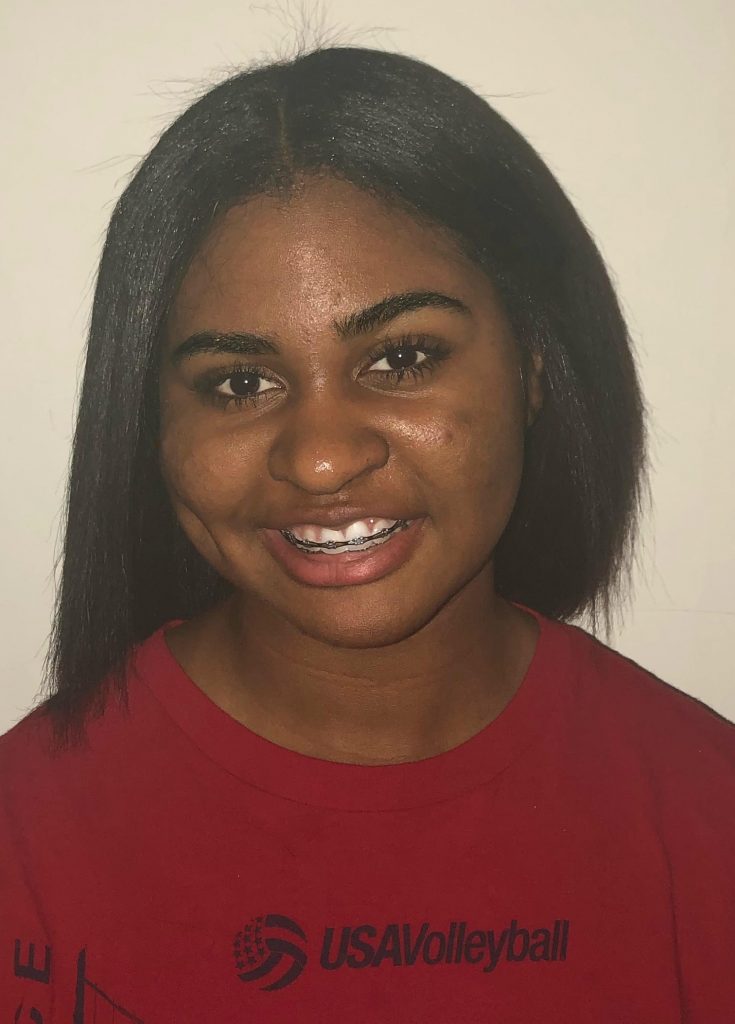
    BLYTHEWOOD – The summer of 2018 is shaping up well for both former and current members of the Blythewood Bengal family. First, former Bengal Jordyn Adams was picked up in the first round of the MLB draft, and then volleyball standout Colleen Finney received an invitation to the U.S. Girls’ Youth National Training Team Roster.

    If Finney, a rising junior and Clemson commit, delivers a strong outing, she could earn one of 12 available spots on the U.S. Girls’ Youth National Team, where she could potentially compete in the 2018 Under 18 NORCECA Continental Championship.

    The Bengals went 28-9-3 last season, with a solid 10-2 record in region play, and Finney contributed 59 kills and 33 triple blocks. She heads to the Olympic Training Center in Colorado Springs, Colorado to train from July 20 to Aug. 3.

  • Retiring the Flag

    RIDGEWAY – Eddie Baughman, a member of Lake Wateree VFW Post 8346, participates in the Post’s annual flag retirement ceremony on June 14. The Post retired over 160 flags during the ceremony.

  • McEachern, Garvin in runoff

    McEachern

    BLYTHEWOOD – It was a tight House District 77 race Tuesday night for incumbent Joe McEachern, who, with 2019 votes (36.51%), squeaked past newcomer Kambrell Garvin with 2012 votes (36.38%) for a 7-vote majority. But with that slim majority and neither candidate garnering the 50 percent plus 1 votes for a win, the two candidates are now headed for a runoff set for June 26.

    Deyaska Spencer finished behind Garvin with 1,302 votes (23.54%), and John McCleric took 197 votes (3.56%).

    Garvin

    Garvin easily took Blythewood precincts 2, 3 and LongCreek where he shook hands all morning on Tuesday. Deyaska Spencer, an attorney and resident of LongCreek Plantation and also a political newcomer, took the Sandlapper precinct, and McEachern handily took the rest of the precincts in his District including Blythewood 1 and Roundtop where his numbers were strong.

    “We’re ready,” McEachern said of the upcoming runoff. “I’m looking forward to visiting with the folks out there in Blythewood and Fairlawn. I appreciate all those who supported and voted for me. And I hope those who missed voting in the primary know they can still come out and vote in the runoff. Working together, I’m confident we’ll get there.” Garvin could not be reached for comment.


  • Board votes 2-1 for minimum salaries

    WINNSBORO – It’s rare when a major school budget measure passes by a 2-1 vote, but that’s exactly what happened at a recent board meeting.

    On June 5, the Fairfield County Board of Trustees voted 2-1 on a motion directing Superintendent Dr. J.R. Green to develop options in which no district employee makes less than $20,000 per year.

    Trustees Annie McDaniel and Paula Hartman voted for the motion that McDaniel introduced. Board Chairman William Frick voted against, and the remaining trustees abstained.

    Trustee Carl Jackson said the vote happened so quickly, he didn’t realized what had happened until it was too late.

    Jackson said he wasn’t opposed to McDaniel’s motion, but also expressed concern about micromanaging the superintendent.

    “I’m a little disillusioned here. We as a board can say to the superintendent what we want him to do with that salary range,” Jackson said. “I don’t have a problem with that. Let him bring what he’s going to bring and we’ll deal with it. Let the superintendent do his job.”

    Following the vote and further discussion, the board also adopted third and final reading of the 2018-2019 budget by a 6-1 vote, with Hartman opposing.

    Included in the $41.27 million budget are step increases and a 2 percent, across the board salary bump for all employees.

    At second reading, board members also voted to increase the annual band supplement by $10,000, as well as $1,500 increases for the boys’ and girls’ basketball coaches. Those supplements remained in the final version.

    The band stipend will be disbursed among all individuals who work in the band program, Green said.

    There is no tax increase in the budget, with millage remaining constant at 203.1 mills.

    Green, though, hinted that a millage increase might be required if the board enacted a measure to increase every employees’ salaries to at least $20,000.

    “I will bring back what you want me to bring back, even if it means a millage increase,” he said.

    The salary debate was a continuation of a heated discussion that first arose during the May board meeting.

    McDaniel, who is running for the House District 41 seat, pressed fellow school board members for details concerning unclassified worker salaries.

    Specifically, she wanted to know what an annual salary would be for various hourly employees, cafeteria workers in particular.

    Green said it was too difficult to provide an exact number, saying it depends on how many hours worked. McDaniel kept pressing.

    “I’m not understanding why it’s heartburn to have the conversation,” McDaniel said.

    Kevin Robinson, the district’s finance director, said school cafeteria worker salaries and can’t be easily annualized because they work varying numbers of hours.

    “Food service workers do not all work the same number of hours per day because it’s based on that school,” Robinson said. “All of the annual salaries are going to be different for the food service workers based on the fact they do work a different number of hours.”

    Green added some cafeteria workers work during the summer while others don’t.

    “There’s a variation there as well,” he said.

    As was the case at second reading, frustration eventually entered into the budget discussions.

    “You can’t pick one salary and say that’s not a fair salary,” Frick said. “That’s the issue I had last time. I’m seeing you trying to make a point.”

    “We need to look at this and if this is what we want it to be,” McDaniel snapped back. “Come on, $13,000 to $14,000 a year? That is not a livable salary.”

    Hartman, who supported McDaniel in voting against the budget at second reading, voiced some of the same concerns.

    “The richer get richer and the poorer gets poorer,” she said.

    $5.4 million deficit expected

    In related budget matters, the board also approved a tax anticipation note (TAN) not to exceed $5.4 million.

    A TAN is a short-term loan to help the district cover temporary budget shortfalls until sufficient tax revenues become available in January 2019.

    According to board documents, a shortfall is expected to begin on or about Sept. 22 and continue through late January 2019. The total projected shortfall amount is $5,346,850.

    The loan’s interest rate was not stated.

    Board Chairman William Frick, a longtime critic of the board’s habit of issuing millions of dollars of TANS each year, voiced frustration over needing to vote for the note.

    “Is there going to be a year where I’m not going to have to vote on one of these things?” Frick asked. “I understand the reasoning behind this, but I would like to see a day when I don’t have to vote on this.”

    The board signed a $5 million TAN in 2017, district documents state.

    Tax bills are due Jan. 15, 2019, which is when the district anticipates receiving the needed tax revenues sufficient to cover expenses.


    Related: School budget talks heat up,

  • Two 53-foot trailers stolen in Blythewood

    BLYTHEWOOD – A Blythewood office for a national trucking company is missing a couple of 53-foot trailers, a Richland County Sheriff’s Department incident report states. While the report was filed last week, the trailers are reported to have been stolen from a truck/trailer storage lot at 10432 Wilson Boulevard in Blythewood for perhaps as long as six months.

    The trailers, a 2007 white transport trailer and a 2011 flatbed, were stored in a lot where other contractors had access, the incident report states.

    Anyone with information about the missing trailers, call the Richland County Sheriff’s Office Crimestopper Hotline at 1-888-CRIME-SC.

  • Switzer to hand over financials

    BLYTHEWOOD – Town Council again addressed the growing issue of the Blythewood Chamber of Commerce and Visitor Center financials at the May 26 Town Council meeting. And, again, Council asked Mike Switzer, Executive Director of both the Chamber and Visitor Center, to produce the complete financial records for both organizations. The Town and The Voice have requested the financials several times over the past month without results.

    Switzer said the Chamber’s treasurer, Dennis Drozbak, would submit the information to the Town on or before June 12. At the meeting, Switzer explained again why the financials had not been presented to Council.

    “We’ve been creating all these sub-categories with much more magnification. We don’t have these categories filled in so we have to go back and reclassify every single thing,” Switzer said.

    “We need those before we can approve the numbers for the next budget year,” Mayor J. Michael Ross said.

    “I thought you only wanted the budget,” Switzer said. “We haven’t finished the budget.”

    “We want the financials, everything. Anything that’s been written in the paper or questioned,” Ross said. “We want you to present this Council with something we can look at and we are either going to say the paper wasn’t right or, if it is right, then we’ve got a problem.”

    While former Town Councilman Tom Utroska has on several occasions called for an audit of the Chamber’s funds, the Council as a whole has never asked for an audit and, until recently, rarely questioned how the Chamber spent money it receives from the general fund or how the Visitor Center spends the money Council awards it from the accommodation tax funds.  The Town has given Switzer more than a month to work on the Chamber and Visitor Center financials in order for them to be reviewed by Council.

    Switzer insisted, however, that he has been open about the Chamber’s finances with the Town.

    “We actually give monthly P & L statements to the town’s representative on the Chamber board,” Switzer said.

    “We’re not just talking about profit and loss,” Ross said. “We’re talking about financials that we can look at. More detail on salaries and everything. Let us look at everything so we can make a determination.”

    Ross notified The Voice last weekend that he, Councilman Brian Franklin and the Town’s representative on the Chamber board, Ed Parler, met with Drozbak on Wednesday, June 6 to discuss the Chamber and Visitor Center financials.

    “Mr. Drozbak brought no documents with him. We told him we want to look at all the Chamber and Visitor Center financials,” Ross said.

    Ross, town attorney Jim Meggs, another  Councilman and Town Administrator Brian Cook were to meet on Wednesday, June 13 with Switzer and Drozbak, who agreed to hand over the requested documents. That meeting was scheduled shortly after The Voice went to press.

    The Chamber has never responded with financial documentation requested by The Voice through a S.C. Freedom of Information request submitted on April 4. Detrimental to that request, the S.C. Supreme Court issued a ruling on May 23, in a case brought against the Hilton Head Chamber of Commerce that strips the media and citizens of their ability to use the S.C. Freedom of Information Act to find out how Chambers of Commerce in the state spend taxpayer money awarded them by governments. With the ruling, the government that awards the money is now the only entity that has recourse to find out how a chamber spends that money.

  • Former FCHS honor grad murdered

    Crocker

    CAMDEN – A Kershaw County man was charged last week with murder in the June 2 shooting death of his girlfriend, a former Fairfield Central High School honors graduate, Kershaw County Chief Deputy Jack Rushing said in a news release issued June 4.

    Katelin Jordyn Crocker, 19, was shot in the head by Alexander Francis Harmon, 28, of Camden, the crime report stated.  Kershaw County 911 received a call early Saturday, June 2, from Harmon’s father, a resident of New York, Rushing said.

    Harmon

    Rushing said Harmon’s father said his son had called to tell him he had shot and killed Crocker who lived with Harmon from time to time, the sheriff’s office said.

    When deputies went to the home, they arrested Harmon and found Crocker dead inside the home from a gunshot wound to the head.

    Sheriff’s deputies found a .12-gauge shotgun and an empty shell casing in the home located on Cleveland School Road, Rushing said.

    Crocker, who graduated from FCHS in 2017, was a licensed cosmetologist and was employed at Ulta in Sandhills.

    Harmon, arrested June 2, remains in the Kershaw County Detention Center.


  • McDaniel wins House Dist. 41 primary

    Annie McDaniel

    WIINNSBORO – The South Carolina House District 41 seat turned over in Tuesday’s election with School Board Trustee Annie McDaniel taking the win over incumbent MaryGail Douglas in Fairfield, Chester and Richland Counties.

    With 2,483 votes (56.66%) to Douglas’s 1,899 votes (43.34%), McDaniel handily took western Fairfield County, both precincts (Kelly Mill and Lake Carolina) in Richland County and all but three in Chester County. Douglas took Chester precincts Baldwin Mill and Eureka Mill and split Chester Ward 4 for a 50-50 tie with McDaniel. In Fairfield, Douglas easily took Lebanon, most of Winnsboro and most of the upper Northeast part of the county and Lake Wateree.

    Fairfield County had a 27.39 percent voter turnout, higher than either Chester or Richland Counties. In the race for District 41, 4,382 votes were cast.

    Neither Douglas nor McDaniels could be reached for comment before press time.