Author: admin

  • Coleman named to national post

    Coleman

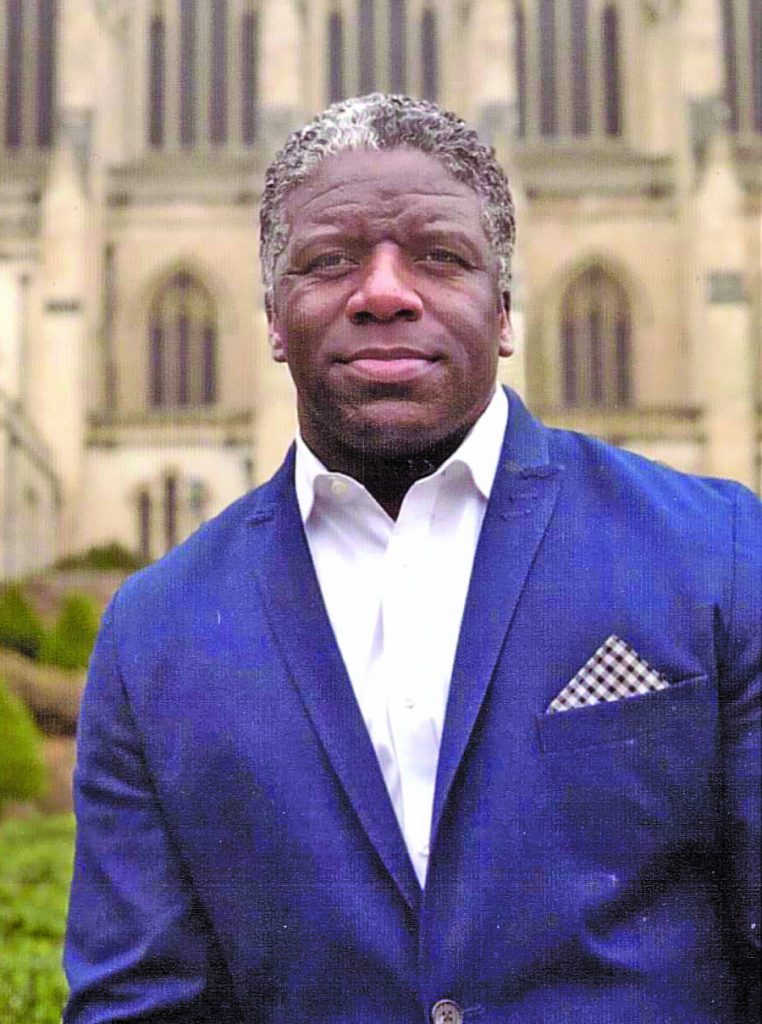
    WASHINGTON, D.C. – Blair native and former government cybersecurity expert Kelvin Coleman was appointed as Executive Director of the National Cyber Security Alliance (NCSA) on Dec. 5.

    A veteran of cybersecurity posts at the White House and the U.S. Department of Homeland Security (DHS), Coleman has held leadership roles throughout his 20-year career.

    “We are extremely pleased to welcome Kelvin,” said William O’Connell, chief business security officer at ADP and chairman of the NCSA Board of Directors. “Private cybersecurity sectors have prepared Kelvin for his leadership role at NCSA, an organization that is supported by industry, nonprofit, government and academia,” O’Connell said.

    Coleman joins the organization with experience in cybersecurity at both a national level and in local markets. In career-spanning cybersecurity awareness tours in 49 states, Coleman has briefed tech giants, local storeowners and politicians, including 35 governors and numerous state-level security committees.

    Most recently, Coleman worked with the National Defense Information Sharing and Analysis Center on strategic cybersecurity policy and products.

    He also worked on the President’s National Security Telecommunications Advisory Committee during portions of George W. Bush and Barack Obama’s administrations. In the early stages of Obama’s first term, Coleman served as a member to the White House National Security Staff, coordinating cybersecurity policy with the intelligence community as well as state, local, international and private-sector organizations.

    “As our society becomes more digital and inter-connected, cybersecurity awareness is increasingly a matter of collaboration between the private and public sectors – convening intelligence experts, politicians, entrepreneurs and academic researchers,” Coleman said.

    “Having worked closely with cybersecurity advocates in many of these disciplines,” Coleman said, “I know there is widespread eagerness to educate the country about our shared responsibility in helping to protect the internet and fostering an environment for cybersecurity knowledge sharing.”

  • Fairfield County Man arrested on child pornography charges

    Luffman

    WINNSBORO –  A Winnsboro man has been charged with 10 counts connected to the sexual exploitation of a minor.

    John Thamer Luffman, 31, was arrested on Dec. 19. He is accused of distributing and possessing files of child pornography and charged with four counts of sexual exploitation of a minor, second degree (§16-15-405), a felony offense punishable by up to 10 years imprisonment on each count; and six counts of sexual exploitation of a minor, third degree (§16-15-410), a felony offense punishable by up to 10 years imprisonment on each count.

    Internet Crimes Against Children (ICAC) Task Force investigators with the Attorney General’s Office made the arrest. Investigators with the Fairfield County Sheriff’s Office and United States Secret Service, both also members of the state’s ICAC Task Force, and the Winnsboro Police Department assisted with the arrest.

    The case will be prosecuted by the Attorney General’s Office.

    Attorney General Wilson stressed all defendants are presumed innocent unless and until they are proven guilty in a court of law.

  • RW book funding voted down

    RIDGEWAY – The Ridgeway Town Council denied a request last week to approve $1,000 from the general fund to publish a book about the heritage and history of the town.

    Former mayor Charlene Herring appeared before Council Dec. 13 to request they follow through on a 2017 vote to fund the book’s publishing costs.

    Herring said the costs to publish the book had originally been estimated at $2,271, the lowest bid submitted by ByFarr out of Columbia. That amount, Herring told council, would publish 125 copies of a 100-page book that details the town’s history. The bid specified $1,200 for printing, $975 for designing pages and scanning photos and $95 tax. The bid price also included 24 color photos and an unknown number of posters at a cost of $3 each.

    A note on the bid document stated that, “color pages may reduce the cost as we may not need (them).” Nothing was said by Herring or council about a reduction in pricing or the inclusion of the 24 color pages or the $3 posters.

    Herring said if the Town sells all the books at $20 per copy, the total profit would be $229.

    The book had originally been planned for publication in early 2017. Council voted unanimously at that time to pay for the project with the town’s hospitality tax (H-tax) revenue and then funnel the profits from the sale of the book into the general fund.

    After being informed by the state’s Municipal Association that, according to state statute, any profits from a book funded with H-tax revenue would have to be returned to the H-tax fund and not to the general fund, Council rescinded its vote.

    Council then narrowly passed, by a 3-2 vote, a new motion to withdraw money for the book’s publication from the town’s general fund and return any profits from the book’s sales back to the general fund as prescribed by state statute.

    Council members Angela Harrison and Heath Cookendorfer voted against the new measure.

    In October, Herring appeared before council to revisit the book’s funding, and at the December council meeting, Herring told she had secured over half the amount needed to cover the cost of publishing the book and asked council for a new amount of just $1,000 to make the book a reality. She said the profits from the sale of the book would be returned to the town.

    “I believe the book is a great, unique story about Ridgeway and I hope to begin finalizing as soon as possible if approved,” Herring stated. She said the book would include interviews with citizens and historical photographs of the area, businesses and local events. However, she did not have any of the documents with her to show to council.

    Herring faced strong opposition for her project from the Heritage/Culture Committee whose chairwoman, Jon P. Ward told council at the Dec. 13 meeting that the committee had pulled its support for the project at the end of 2017, and had provided a letter to the town’s administration stating that it no longer endorsed the project.

    In the letter, Ward said she had initially helped Herring negotiate for the book a large collection of early photographs pertaining to the people and places in Ridgeway, but that many of the photographs were returned to the owner last March, eliminating their use in the book as initially planned.

    “It is for this reason that I cannot support the publication of the book as originally planned,” Ward wrote.

    Ward went on to tell council at the meeting that Herring had withheld half of the photos lent to her for the project – an allegation that Herring denied during the meeting.

    “That’s like accusing me of theft; I don’t do that. People should know my reputation and what I stand for,” Herring told the council.

    During council’s discussion, Angela Harrison and Donald Prioleau expressed their support for the project.

    “I don’t like going back on something I already approved before,” Prioleau stated.

    Mayor Heath Cookendorfer said he questioned the book’s merits considering the current lack of support from the Heritage/Culture Committee. Cookendorfer said he had initially given his support to Herring and the book, but that the change of heart by the committee had made him hesitant to move forward on the project.

    “Yes it’s a thousand dollars, but this letter (of disapproval) is a little bit alarming to me. I want to know what the underlying issue is,” Cookendorfer stated.

    Councilman Dan Martin said he believed the town would not stand to make much profit from the book’s sales based on current information provided to the town.

    “It’s not about profit, it’s about the town,” Harrison countered.

    Council member Rufus Jones requested an excerpt from the book for the council to review before proceeding.

    Herring said she only had hand-written copies of transcribed interviews from local families, along with photos, and excerpts from other books that she would be using in the Ridgeway book. With nothing to show council, Herring asked them to accept her word about what the book would offer.

    “I ask this question: when have I not ever delivered on anything I have promised for this town,” Herring answered to Cookendorfer’s request.

    “I think it’s a great book and would be great PR for the town,” she stated.

    In the end, the council chose not to proceed on the project, with only Harrison and Prioleau casting votes in favor of funding $1,000 to the project.

  • Council OKs zoning for medical building

    BLYTHEWOOD – The Blythewood Town Council unanimously approved a motion Tuesday night to rezone property in city limits to allow for a potential medical business development.

    The property consists of nearly two acres, with the frontage of the area located within city limits at 204 Langford Road, across from the intersection of Langford and Sandfield Roads. It is currently zoned D-1 for a development district.

    Applicants Dr. Sara Beaver, owner of Blythewood Eye Care, and Rob Lapin, a commercial realtor with NAI/Avant, requested the city rezone the property to Town Center District with architectural overlay. Upon approval, the property will also be subject to sign overlay standards and Board of Architectural review guidelines will also apply.

    Beaver recently told The Voice that she has some considerations in mind for the property’s future use, but she remains uncertain about specific plans as of the Dec. 18 council meeting.

    Much of the back portion of the property extends into Richland County. Town administrator Brian Cook said that part of the area would likely be subdivided off into a larger parcel at the rear of the property, and was not part of the consideration Tuesday night.

    The Planning Commission approved the rezoning at its Dec. 3 meeting.

    One building, a home, does still stand on the property, and Cook stated at the meeting that some plans he has viewed would allow for the remodeling of that building in addition to landscaping and parking development.

  • Cedar Creek residents to preserve church

    BLYTHEWOOD – After 274 years, it was announced in June, 2017, that the doors of the historic Cedar Creek Methodist Church would close. A final service was held on May 6, 2018, under a canopy outside the building.

    Blythewood artist Harold Branham captured the historic Cedar Creek church on canvas.

    The closure was the will of the S. C. United Methodist Conference, which owns the church and the property it sits on. The service was billed as a celebration, but for the descendants of the families who had attended the little church all their lives, and who wanted to keep it open for the community, it was a sad occasion.

    They wanted to know what would happen to the building. Would the Conference sell the property? Could the Cedar Creek families continue to use the church for weddings and other special occasions? Who would pay for the upkeep?

    While a resolution affirmed by the Conference included a clause recommending the property be preserved because of its historical significance, there were no guarantees.

    “While I really can’t comment on things I don’t have power over, I can make recommendations,” Rev. Cathy Jamison, a former pastor at Trinity United Methodist Church in Blythewood and the current Columbia District Superintendent and Secretary to the Cabinet of the S.C. United Methodist Conference said. “Unfortunately there’s not a stockpile of money for the preservation of the building so that would have to be a community fundraising effort. The plan for the future of the property is evolving,” Jamison said.

    But the Cedar Creek community was not without resolve and resources to save their beloved church.

    “When we learned that the historical landmark was about to be decommissioned,” said Bill DuBard, a descendant of one of Cedar Creek’s early families whose history intertwined with the church, “we acted quickly to set in motion a process whereby we could preserve the church for the community, perhaps as a wedding venue or for other community events.”

    Margaret DuBard, Bill DuBard’s wife, said the boards of the Blythewood and Upper Fairfield County Historical Societies were supportive of preserving the church as well as the cemetery.

    “We incorporated the Cedar Creek Historical Association and began seeking a charter as a 501(c) (3) non-profit organization to achieve the mission of the Association,” DuBard said.

    A board was formed and Bill DuBard was named president. Other members include Raymond Hendrix, Sandra jones and John Fogle.

    For the past six months the board has worked to establish the legal status necessary to protect the ownership of the church as well as preserve buildings, documents and sites of historical interest to the community.

    Now they are seeking members who will share and support their vision with both financial and time donations.

    The following schedule offers basic donation levels:

    Founding lifetime members – a one-time gift of $1,000

    Legacy members – $250 annually

    Stewardship members $150 annually

    Family membership – $100 annually

    Individual members – $50 annually

    DuBard said, however, that there are many other ways to help as well, including volunteer work and donation of preservation materials.

    For more information about the Association or to join, email: cedarcreekhistorical@yahoo.com.

    Blythewood artist Harold Branham created a 16 x 20 print of the church on canvas that is available for sale and can be seen in the lobby of the Community Bank at the corner of Blythewood Road and Main Street. For more information, conatact Branham at 348-7773.

  • Is District driving Teacher Village?

    WINNSBORO – A proposed “Teacher Village” has been portrayed as primarily a function of the Fairfield County School District Education Foundation, and not the school district office.

    In reality, the district has been just as hands-on, if not more.

    Whether it’s filing startup documents, lobbying public officials or soliciting taxpayer money, district office personnel have been intimately involved in the Teacher Village, public records show.

    If approved, the Teacher Village would begin with 30 homes on 22 acres of land the district owns behind the administration building off U.S. 321 Bypass. Taxpayer money would provide rent subsidies to teachers living there.

    Gorelick Brothers Financial, a Charlotte, North Carolina firm that would build the development, is also seeking a $600,000 property tax waiver.

    Documents obtained through the state’s Freedom of Information Act show the district office has been deeply involved in creating the foundation, registering it and working hand-in-hand with the foundation on the Teacher Village.

    The symbiotic relationship between the district and foundation differs from how Dr. J.R. Green, district superintendent, described the relationship in a November 2016 interview with The Voice.

    “The School District’s Board establishes the Foundation, but after that, the District has no oversight or control over the Foundation,” Green told The Voice.

    Green couldn’t be reached for comment.

    During the school board’s October 2018 meeting, Green said the district’s only investment in the Teacher Village is providing land for the project.

    “The school district has deeded the 22 acres of land to the foundation,” Green said. “All the conversation, all the agreements and all the arrangements moving forward are between the foundation and Gorelick Brothers.”

    Others, however, think the lines are blurred between the foundation and school board.

    “It may not be your sister, but it’s your stepsister,” said Winnsboro Mayor Roger Gaddy.

    Building a Foundation

    The school district’s board of trustees voted to establish the foundation in November 2016.

    At the time, Green said the district would pay the roughly $1,000 needed to establish the foundation as a 501(c)(3) organization.

    He also told the board of trustees that he would want to appoint the foundation’s board members, but later told The Voice the foundation would elect its own officers.

    In March 2017, the district formally registered with the Secretary of State’s office, according to incorporation documents obtained by The Voice.

    Kevin Robinson, the district’s director of finance, is listed in those documents as the foundation’s original registered agent.

    Documents also show the foundation and school district share the same street address – 1226 U.S. Highway 321 Bypass South.

    Dr. Sue Rex, wife of former State Superintendent of Education Jim Rex, was appointed chair of the foundation board at the April 2017 foundation meeting, according to the minutes.

    Robinson, however, remained the registered agent until June 2017, when the district filed paperwork transferring that role to Rex.

    In 2016, when the board of trustees voted to create the foundation, Board Chairman William Frick said forming a foundation was beneficial because it would encourage donations to help fund the Teacher Village.

    At first, that’s the direction the foundation pursued.

    “Foundation board members discussed potential fundraising ideas to include a capital campaign and Go Fund me,” the April 2017 minutes state.

    Minutes in subsequent meetings show the foundation actively discussed working with Fairfield County and S.C. Uplift Community Outreach in seeking state and federal grant opportunities.

    The September 2017 minutes state BB&T expressed interest in the Teacher Village, and there were also detailed discussions about HUD grants. However, the latter option proved to be a challenge.

    “After talking with lending institutions, we realized the only way we could put together the project was with HUD money,” Rex said during an October presentation to Fairfield County Council.

    HUD has a $64,000 cap per household, which would eliminate virtually any teacher with a working spouse.

    “The only problem with HUD money is there’s a limit on how much people in that household can earn in order to live there,” Rex said. “HUD housing isn’t really going to work for us.”

    District seeks taxpayer help

    There wasn’t any public mention of taxpayer support for the Teacher Village until Green mentioned it during a recent County Council meeting.

    On Oct. 22, under questioning from Councilman Jimmy Ray Douglas, Green acknowledged taxpayer money would subsidize $300 in monthly rent reductions for teachers living in the village.

    “I’m interested in how you plan to rent these houses for no more than $600 to $900 a month. It seems low for what the tenants would be getting based on the square footage,” Douglas said. “How will the houses be rented for rates this low? Is it possible the school district will be subsidizing the rental fees?”

    Green said the subsidies come from a proviso state lawmakers inserted into the state budget, which is mostly supported by state income taxes.

    The proviso allocates millions of dollars to the S.C. Center for Educator Recruitment, Retention & Advancement, or CERRA.

    In 2017-2018, CERRA received $9.5 million via the proviso. The rest of its nearly $19 million budget came from other expenditures, according to the organization’s annual report.

    Jane Turner, executive director of CERRA, said she and Green have discussed using state funds for the Teacher Village.

    Turner said the district has previously requested funds from CERRA, but not for the Teacher Village. She and Green have discussed the Teacher Village, though.

    “It [the Teacher Village] is an appropriate use of the funds,” she said. “They haven’t yet requested funds. I’ve talked to the superintendent briefly about it.”

    Turner said a special formula is used to determine a district’s allocation. Using that formula, she said the district is eligible to receive $150,600.

    “There’s just a form that has to be filled out and sent to my organization and I approve it if it’s an appropriate allocation,” Turner said.

    Green, Rex and Gorelick

    With HUD eliminated as an option to fund the Teacher Village, the foundation turned to the private sector.

    Rex said that’s when she was introduced to Gorelick Brothers, which was willing to fund most of the project – with a catch.

    Gorelick would front $3 million of the $3.6 million necessary to build the Teacher Village. In exchange, it wanted a $600,000, seven-year tax abatement. That would require a County Council vote to establish a multicounty business park.

    Green said the foundation has been handling most of the discussions with Gorelick, though the district and foundation have both relayed Gorelick’s request to the county.

    “We’re just advocating on behalf of the investor at this point in time,” he said.

    As for the development itself, Green said the district has been handling efforts to get the Teacher Village property rezoned from commercial to residential.

    “The school district is attempting to rezone the property before it’s transferred,” to the foundation, Green said. “So a formal request will come from the school district relating to the zoning.”

    Both Green and Rex have been meeting with Fairfield County staff and elected leaders, privately and publicly.

    The most recent meeting between the government agencies occurred last month in which the county voiced concerns with the multicounty business park request.

    Council Chairman Billy Smith told Green and Rex if the county approves the business park before the Teacher Village property is rezoned, he wants Gorelick to agree to an indemnification clause to shield the county from legal liabilities.

    Green said Monday night was the first he’d heard of the indemnification clause, though Rex and Smith said they’ve been discussing it.

    “In terms of this indemnification clause, it’s the first that I’ve heard that,” Green said.

    “Let me just say this, I’ve never spoken to anyone at Gorelick directly. The communication I’ve had has been with Dr. Rex,” Smith replied. “I’m sure she will tell you that we’ve discussed that a number of times for two plus weeks now, the idea of indemnification.”

    “I have brought that up to Gorelick,” Rex affirmed. “They know you’re asking that. They haven’t responded about it.”

  • Providence Health-Fairfield ER opens

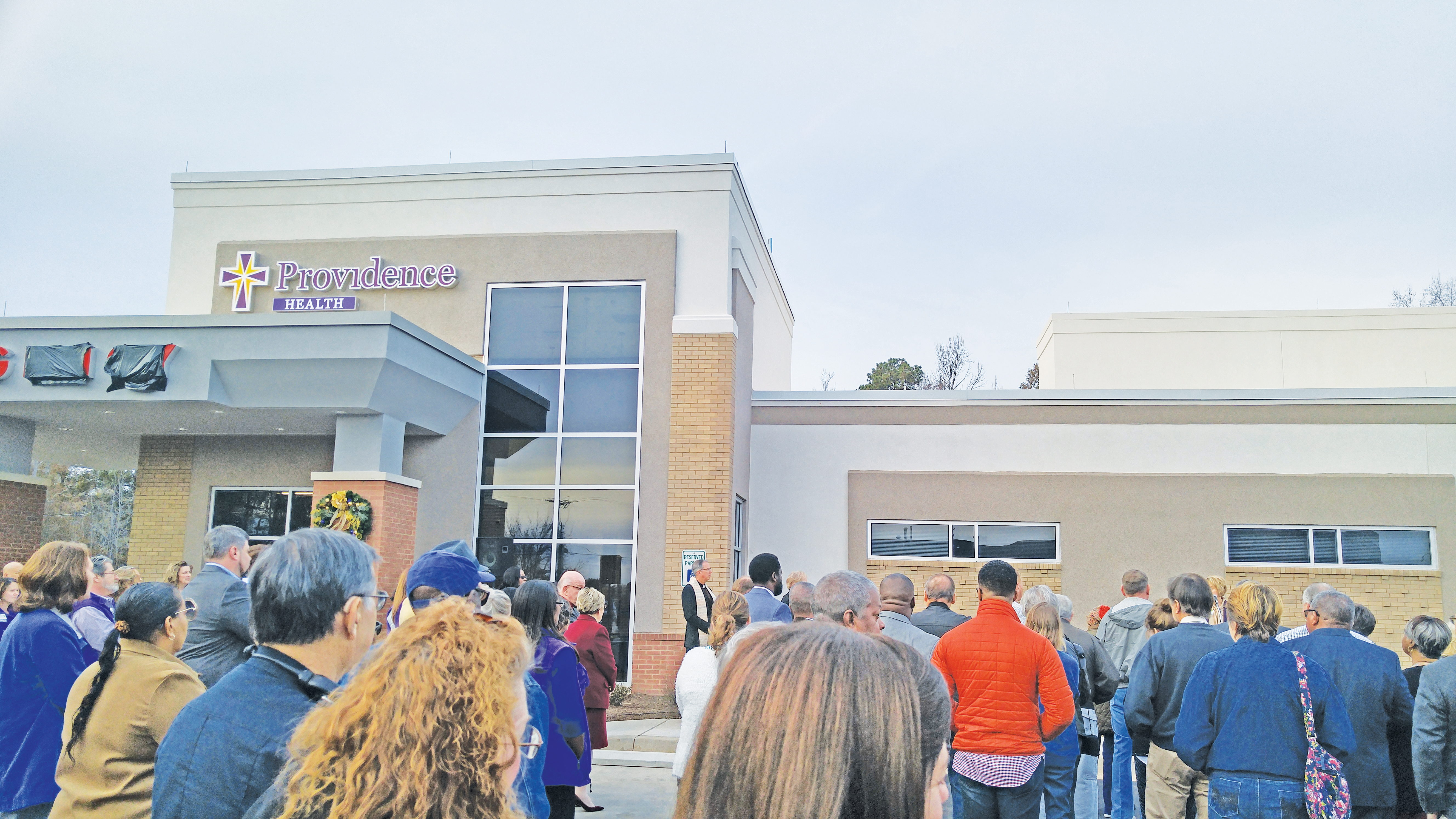
    After a grand opening for the community (above) on Dec. 13, the new Providence Health-Fairfield Emergency Room on Tuesday.

    WINNSBORO – As the baton passed from Fairfield Memorial Hospital (FMH) to Providence Health-Fairfield Emergency Room on Tuesday, citizens in Fairfield County were not without health care service for a minute. As FMH officially closed its doors forever, the county’s new ER opened its doors the same day to a new world of state-of-the-art emergency health care for Fairfield County.

    The opening of Providence Health’s emergency room comes after almost three years of planning and cooperation between the FMH board and administration, Fairfield County administrative staff and Providence Health and legislative intervention from the county’s former State Sen. Creighton Coleman and former State Rep. MaryGail Douglas.

    And there could be more good news to come as the FMH board continues to market (through ROI Commercial out of Columbia) the available 25-bed hospital building for another health care entity.

    The new ER facility, located across from Bi-Lo, near the intersection of US 321 and Highway 34, includes 12,000-square-feet for emergency services, featuring six exam rooms (including four treatment rooms and two for future expansion), two trauma rooms, an onsite laboratory, imaging services such as computerized tomography (CT) scan, ultrasound and x-ray.

    An additional 6,000 square feet of space is available for future expansion of services as needs in the community are identified.

    If the new facility to provide continuity of health care in the Fairfield community was a long time coming, some close to the project say it is a modern miracle that it came at all as hundreds of other rural hospitals have closed in recent years, three of those in South Carolina. But for the infusion of millions of dollars from the county in recent years, Fairfield Memorial might have shuttered much earlier.

    Funded by $12M from LifePoint Health for construction of the new facility and $10M ($1M a year for the next 10 years) from Fairfield County, the free standing Providence Health ER was also made possible in part by nearly $4M in transformational funding from South Carolina’s Hospital Transformation Program which supports rural access to healthcare resources.

    Those transformational dollars, appropriated by the legislature, are earmarked to go to large hospitals like Providence to encourage them to partner with rural hospitals that are in danger of closing. Because talks between the hospital and Providence were still in the early stages as the deadline for application for the funds loomed, it was through the significant efforts of Coleman and Douglas that the house and senate extended the application deadline for the Providence project.

    “This Emergency Room is a shining example of what can occur when multiple organizations work together to do what’s right for the community,” Providence-Northeast Hospital CEO Lindy White said in a statement on Tuesday. “The new facility will serve the county’s patients during their times of greatest need and, at the same time, keep them close to home.

    “It is a blessing and an honor,” White said, “to serve such a welcoming part of the country.”

  • Blythewood man killed on I-26

    LEXINGTON – A Blythewood man died in a motor vehicle crash on I-26 Eastbound near exit 104 on Wednesday about 9:45 p.m., Dec. 12.

    Thaire Mkijana, 20, was traveling in the center lane when his vehicle became disabled and was struck from behind by another vehicle, according the Lexington County Cororner’s office. Mkijana was transported to an area hospital where he was pronounced dead a short time later.

    The driver of the other vehicle was transported to an area hospital with reportedly minor injuries.

    The South Carolina Highway Patrol is investigating.

  • Chamber celebrates Christmas at drop-in

    William & Lynn Medlin, Chamber Director Gene Stephens, Tabitha Williams. Dr. Phil Wilkins

    WINNSBORO – The Fairfield County Chamber of Commerce ushered in the holidays with its annual Christmas drop-in on Dec. 13. The event, held at the newly named Carolina Center for Events and Conferences, was sponsored for the 12th consecutive year by TruVista. The new Chamber director, Gene Stephens, was on hand to meet and greet more than 85 members and their guests, who enjoyed visiting and dining.

  • R2 Schools locked down as precaution

    BLYTHEWOOD – An incident that involved shots fired impacted several Richland Two schools in Blythewood on Monday after deputies began looking for a suspect in the Highlands neighborhood in Northeast Columbia. The shooting incident, which happened in the 4800 block of Hardscrabble Road, caused increased patrols in the area around Hardscrabble and prompted the Richland County Sheriff’s Department to place a limited lockdown on several Richland Two schools Monday afternoon.

    Due to the possibility that the suspect was within the community, the following schools were placed on a short delay for bus riders and walkers only: Bridge Creek Elementary, Rice Creek Elementary, Lake Carolina Elementary Upper and Lower, Center for Inquiry, Center for Achievement, Kelly Mill Middle, Blythewood Middle, Summit Parkway Middle and Ridge View High.

    Car riders were released on schedule.

    In an email on Monday afternoon, Sgt. Amanda Jordon with the Richland County Sheriff’s Public Information Office, stated that at about 2:30 p.m., deputies determined that the public was no longer in danger and the buses were released.

    Westwood Threat

    Across town, a threat that was allegedly made towards students and faculty members at Westwood High School last week has been deemed “not credible” by Richland County authorities.

    According to Deputy Alexis Aarons with the Richland County Sheriff’s Department public information office, a child with intellectual disabilities overheard a conversation and misunderstood what was being said in regards to a post on social media last week.

    “There was no intent to do harm in the post. No charges will be filed in this case,” Aarons stated.

    On Friday morning, Dec 14, at approximately 10 a.m., school officials notified parents that a morning assembly planned at the school was being cancelled after they were alerted that a threatening message was being sent through Snapchat.

    According to officials, the message said that a boy with a gun had threatened to cause harm during the assembly.

    By Friday afternoon, officials informed parents that the threat was already not appearing to be credible and that the faculty was continuing the day as normal on campus.

    Principal Cheryl Guy released a message to parents Friday afternoon saying that there had been no credible threats made against any student or the school, and that officials had acted swiftly when receiving the initial complaint.

    “I am thankful that we have students who immediately reported it to staff, and our School Resource Officer and our administrators were able to quickly investigate,” she stated in the notice.

    “A threat of any nature is not a joke to us,” she added in another notice.

    The assembly was rescheduled for Monday morning, and was held without incident.

    Barbara Ball contributed to this article.