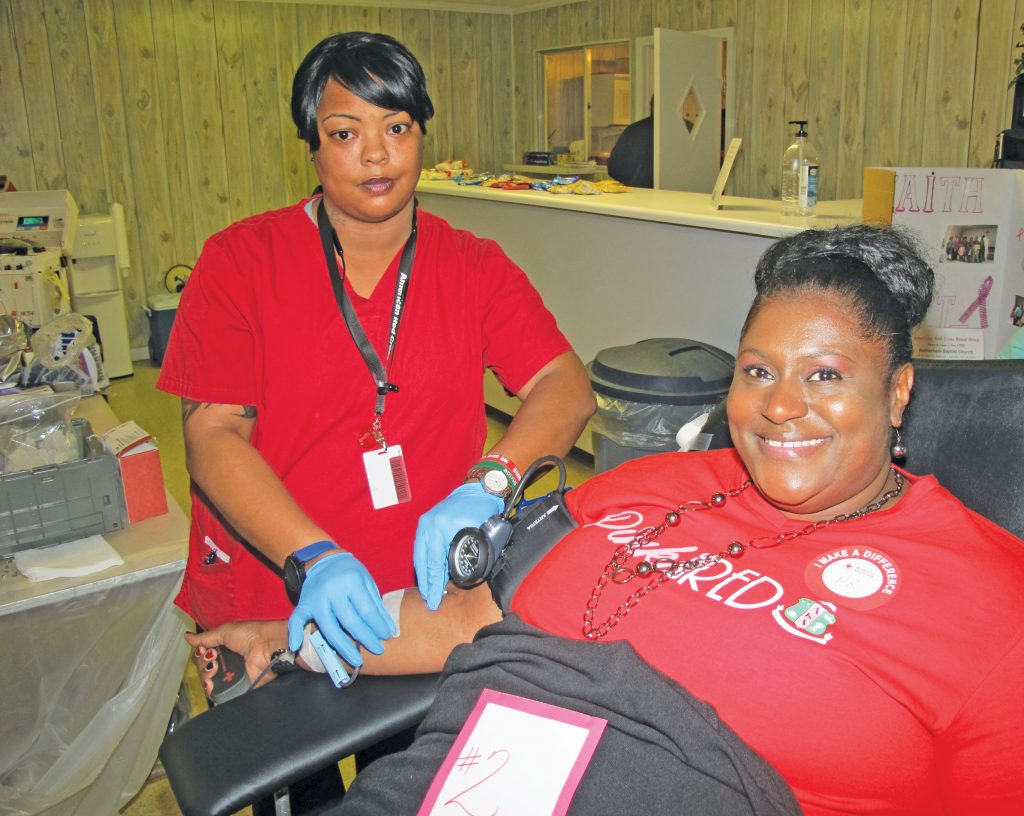
RIDGEWAY – Shawna Moore, right, donates blood during the Ayden’s Turn Blood Donation Event on Saturday at Bethlehem Baptist Church in Ridgeway. Assisting is American Red Cross technician Nicole Davis. Organizer Bobbi Qualls reported “a great turn out of donors who gave 23 pints of blood.” The event also included information about traffic and drug safety.
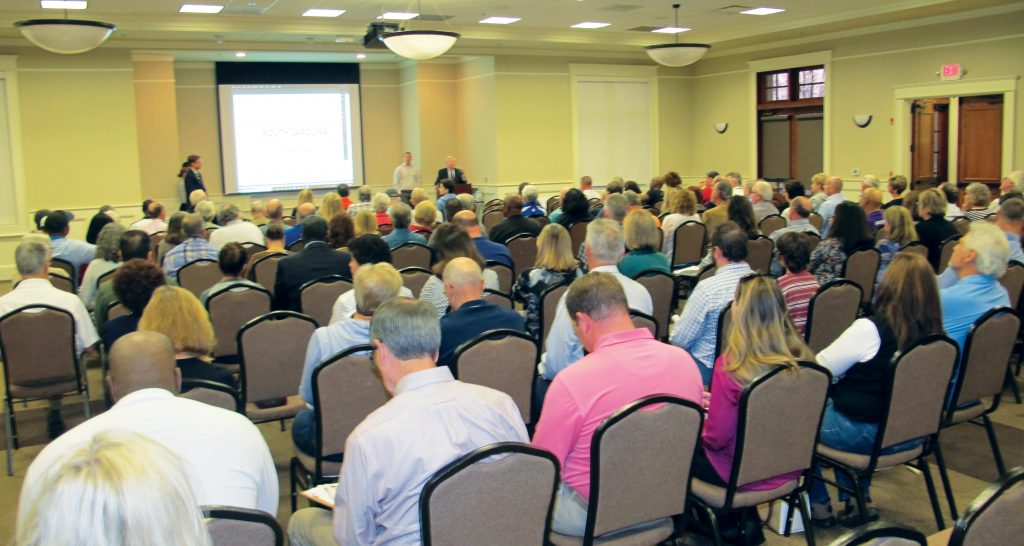
Approximately 200 people packed Doko Manor in Blythewood to hear ECapital’s plan to develop the golf course at Crickentree. | Barbara Ball
BLYTHEWOOD – Representatives of Texas investment firm ECapital unveiled a revised proposal for a residential development proposed on the former Golf Course of South Carolina property in the Crickentree neighborhood last week at a meeting held at Doko Manor. More than 200 residents of Crickentree and other area golf course communities attended.
After proposing 480 homes on the property in August, ECapital’s Ryan Buckman said Thursday night that the company had dropped the number of homes to 249 homes in response to residents’ pleas for lower density in August.
Another concession, according to Shaun Tooley, an engineer representing the land design firm that produced the plan, is a 150-foot natural buffer of trees and shrubs that would shield the existing neighborhood homes from the new development. That buffer, Tooley said, would be deeded to the new development’s homeowner’s association who would also be responsible for maintaining it.
The revised development consists of homes clustered together on minimum 8,500-square-foot lots, leaving 60 percent of the property in green space, Tooley said. He said the homes would range from 2,500 to 3,500 square feet in size and be priced at $350K to $425K.
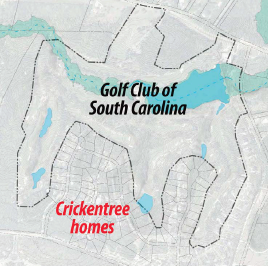
Much of the 183 acre golf course property borders the Crickentree subdivision which is accessed off Kelly Mill Road.
One side of the golf course is the back yard to many of the 145 upscale Crickentree homes that boast large lots, some up to two acres in size.
ECapital bought the mortgage on the golf course for $1 million and initiated foreclosure last July. The mortgage was foreclosed in August. Now ECapital has moved into the development phase.
To transition from a golf course to a residential property requires rezoning from the current TROS (Traditional Recreation Open Space) zoning classification to a residential zoning classification.
That rezoning effort is where the residents feel they have a foothold to stop the development of hundreds of homes on small lots in their backyards.
The TROS zoning classification dates back to 2007 when the Richland County Planning Commission added it to the Richland County land use plan specifically to protect golf course communities throughout the county from becoming the victims of rampant residential development.
The question from residents of these golf course communities such as Crickentree, is, now, will County Council vote to change the zoning to protect ECapital’s investment and satisfy the developer, or keep the current zoning in place to protect the Crickentree property owners’ investments which the TROS was designed to do.
After presenting slides of the proposed development, residents expressed their concerns about the plan. Jerry Rega, a resident of nearby LongCreek Plantation which has experienced similar issues, said the Crickentree residents will experience loss of property values, traffic congestion and school congestion. He also questioned how storm water drainage would be mamaged since the golf course, where the new homes would be built, now provides that drainage.
“But you guys don’t want to listen,” Rega said to thunderous applause and cheers from the audience. “Every time one of these big companies has a problem, Council has a way of bailing them out. What about bailing out the people in this room? We need to put a moratorium on new construction until Richland County figures out what the heck is going on,” Rega said.
Other residents at the meeting said the proposed development won’t benefit the county financially because the developer is based in Texas. “These [ECapital] people are going to go back to Dallas with $3-4 million and we’re going to lose $3-4 million in our property values,” Crickentree resident Larry Ellis said. “We need some support,” he told Richland County Councilwoman Joyce Dickerson who represents a portion of 29016 and called the meeting.
“There’s no value in rezoning for anyone in this room except the people up front,” Rega added.
ECapital is expected to submit a proposal to the Richland County Planning Commission to rezone the property in the next several weeks.
The Mayor’s Option:
Mayor J. Michael Ross, center, talks with residents who are protesting the development of the golf courses protected by TROS zoning.
Although Crickentree is not within Blythewood’s city limits, Mayor Mike Ross told the crowd that traffic and infrastructure is also the town’s biggest concern. And he said that while the town limits do not extend to Crickentree, he said Crickentree as part of the 29016 family.
“We don’t want any more people coming down Langford Road trying to get to I-77,” he said.
Ross proposed an alternative plan to convert the golf course space into a county park with soccer fields, walking paths, bike trails and other amenities. He said preliminary talks are underway with the Richland County Recreation Commission to buy the property.
Ross then read a statement from Town Councilman Bryan Franklin.
“We have an option we would like you to consider. We have massive development in this area,” Ross said, listing a number of developments in the works or planned. “We will have 6,000 new homes in the next 10 years. If there is one child per home, we’ll have a massive youth population that needs a place for outdoor activities. We don’t have the real estate in the town to provide those opportunities.
“The Crickentree residents have somewhat been betrayed – they purchased homes with the intent of living in a golf course community. The golf course business failed and needs to offload real estate to close the books under bankruptcy to allow this builder to build 250 – 300 homes.
“These homes will create more traffic, more schools, but no recreation area.
“An excellent, common sense compromise would be for the county to purchase this [golf course] for pennies on the dollar, designated as a county recreation center/park and create soccer, Lacrosse and baseball fields as well as senior citizen facilities, walking and biking trails. This would not even require rezoning and would benefit the community.
“It would pay for itself in 20 years with revenues from travel ball and state and regional sports tournaments.
“Let’s not let this jewel in the rough go. Save this open space and help our kids.
“Maybe the Town of Blythewood doesn’t have a horse in this race, but the people will be doomed by traffic. This is something we want to talk to Richland County about.”
SC House Rep. Annie McDaniel, Tangy Brice Jacobs, Dr. J.R. Green and candidate Corey Booker. | Barbara Ball
WINNSBORO – Democratic presidential candidate Corey Booker brought his campaign to Fairfield County Sunday afternoon. About 200 people packed the Fairfield Central High School cafeteria to hear him speak.
Instead of taking the stage, Booker, a senator from New Jersey, hopped the stair railing and spoke to the audience from the floor for almost half an hour. He then introduced SC House Rep. Annie McDaniel, Tangy Brice Jacobs and School Superintendent Dr. J. R. Green.
Booker then proceeded to questions the three on topics of interest to the County and talked about ways to solve some of the county’s problems. Then it was back to the floor to take questions from the audience, touching on a number of issues like gun control, homelessness, better pay and better race relationships.
“My first campaign stop as a candidate for presidency, I wanted to come to this community because my whole career is about going to the places that people often don’t go to, don’t talk about, don’t face and confront,” Booker said.
While in the Columbia area, Booker made several other campaign stops.
BLYTHEWOOD – More electrical power is needed in Blythewood for Fairfield Electric Cooperative to keep up with demand, a company representative told members of the Blythewood Board of Zoning Appeals (BZA) Monday evening. The BZA approved that request unanimously.
Fairfield Electric vice president of engineering, Thomas Black, applied for a special exception to construct an electrical substation at 861 Community Road (TMS#15100-03-06) within the Blythewood Town Center zoning district. The +/- 1.93 acre site is located across Community Road from the Midlands Storage facility.
Black said the need for the electrical substation is driven by the steady construction of housing in the Cobblestone Park subdivision and in the surrounding Blythewood area. The proposed substation would be the third substation in the Blythewood area and the closest to the town’s commercial “load center.” The other two stations are each four miles away from downtown.
Black responded to the Board’s concerns regarding each of five specific criteria necessary to grant a zoning exception.
Regarding (1) the traffic impact – “The traffic impact will be zero. There will probably be just one pickup truck visiting the site daily to perform inspections,” Black said.
Regarding (2) vehicle and pedestrian safety – Black showed the Board a section of the 6-foot high fencing they plan to use – a black painted steel screen, mini louver, 75-mesh Guardiar fence.
“This fence is not climbable and is bullet proof,” Black said. “It will be reinforced to withstand up to a 95 mile-per-hour wind,” he added. The board reacted positively to the sample.
The potential impact of noise, lights, fumes or obstruction of air flow on adjoining property (3) was questioned by Board Member Marlon Hinds.
“What about the lighting at the facility,” Hinds asked. Black explained that “The normal lighting would be one 100-watt LED bulb. There would also be LED,” Black said. “Downward facing lights will be off normally but available during a power outage or emergency maintenance. The only noise generated would come from cooling fans during the summer that generate 65 decibels.”
Hinds questioned the security and signage at the site. Black responded that there would be 11” X 17” alert signs and gate alarms.
Regarding (4) the adverse impact of proposed use on aesthetic character of the area, Black said there is already a SCE&G substation at the end of Community Road and that the new one will be very similar, but there won’t be as many lines as the SCE&G site has, and the SCE&G site doesn’t have the black steel screen fencing that we are proposing.”
Regarding (5) Criteria, Orientation and spacing of improvements of structures, Black said the sub-station would be located toward the center of the property.
Chairwoman Pat Littlejohn asked about the disposition of the trees currently on the site.
“The trees on the site will have to come down,” Black said. “We try to buy the most compact sites available to save money on the overall project. There will be a retention pond. We take all the issues into account when we choose the most practical sites,” he explained.
Because the Board is taxed with consideration of additional criteria for Special Exceptions due to the proposed electrical substation being in the TC Town Center District, the question of land use capability came up. Black referenced the site map saying nearby parcels were zoned industrial and cited plans for a potential commercial project.
Black said this project will consist of two power transformers having capacity to serve 2500 to 3000 households.
Town Administrator Brian Cook said because the site is located in the TCD, a 10-foot landscaping buffer requirement all around the perimeter of the property would be addressed by the Board of Architectural Review next week.
Black balked, saying Fairfield Electric plans were to keep 6 to 8 feet of stone laid outside of the fencing and that no plants were currently planned for the site.
A motion was made by Board member Hinds to approve the special exception with the condition that the BAR approve the landscaping plan when it meets Feb. 19.
In other business, the Board re-elected the same current officers with Pat Littlejohn remaining as Chair and Derrek Pugh remaining as Vice Chair.
COLUMBIA – An online magazine, Business in Focus, has dubbed Fairfield County as ‘South Carolina’s Next Big Boom’ in the cover story of its February 11 issue.
The article credited the County’s purchase of a 1,200-acre industrial mega site along I-77 at Exit 34 as the catalyst for the boom – stimulating future economic growth and manufacturing capacity.
The county acquired the site two years ago with a $3 million investment plus a $6 million grant from the state. Ty Davenport, Director of Fairfield County Economic Development, said the county is currently completing design work for the site’s infrastructure, paid for with another $2 million state grant.
The article also highlights the county’s other important but frequently overlooked amenities – Lake Wateree to the east and Lake Monticello to the west featuring water sports and fishing as well as the lush rural areas that are havens for hunting, sprawling farms and cattle ranches.
BOMAG facility in Walter Brown Industrial Park
“Fairfield County is an untapped resource that a lot of people don’t know about. We really have something good going on here. We’re poised for growth,” Davenport is quoted in the article.
The magazine targets industrial leaders and manufacturing companies looking for locations.
“It [the magazine] is designed to be a marketing tool,” Davenport told The Voice, “and it does a great job in this piece on Fairfield.”
The article points out the county’s ideal location with easy access to airports, seaports and other transportation networks.
“Within an hours’ drive from the county seat of Winnsboro, residents have access to the Charlotte Douglas International Airport in Mecklenburg County, North Carolina, the fifth busiest international airport in the world as of 2017. When it comes to labor for industry, there is a large pool of more than 500,000 skilled workers who live within a forty-five-minute radius,” the article states.
“There are really big opportunities here for people who want to grow their businesses,” Davenport said. “The county is on a very solid financial footing which gives us the ability to do projects, install infrastructure and help companies that are moving in. Our workforce is also younger than the national and state average.
“If, for instance, a major auto manufacturer should show interest in our mega site, we will be able to meet their needs in every way including infrastructure, internet and transportation,” Davenport said.
The article stated that Fairfield’s Economic Development Office is part of two regional development alliances that help market the county. The first is the Central South Carolina Alliance which is based in Columbia and mainly markets the area’s eight central counties to companies around the world. It also belongs to the South Carolina I-77 Alliance, which represents the five counties through which I-77 runs, known as the I-77 Corridor. This stretch starts out in Columbia and runs to Charlotte, North Carolina.
“Together, we are promoting the county and all it has to offer – especially in terms of manufacturing and distribution,” Davenport said.
According to the County’s Economic Development Office, the article states, Fairfield has many sites suitable for commercial, industrial, and distribution activities, making it an ideal spot for businesses.
“What makes it even better is the fact that South Carolina offers significant incentives that really benefit industry. This means that you can have a facility in Fairfield County and enjoy lower costs while still benefitting from Charlotte and Columbia’s amenities,” Davenport added.
This budding industrial haven has a lot to offer both new and seasoned manufacturers, the article states. With vision and drive, the magazine concludes that the leadership of Fairfield County is working to grow the county into the economic powerhouse it deserves to be.
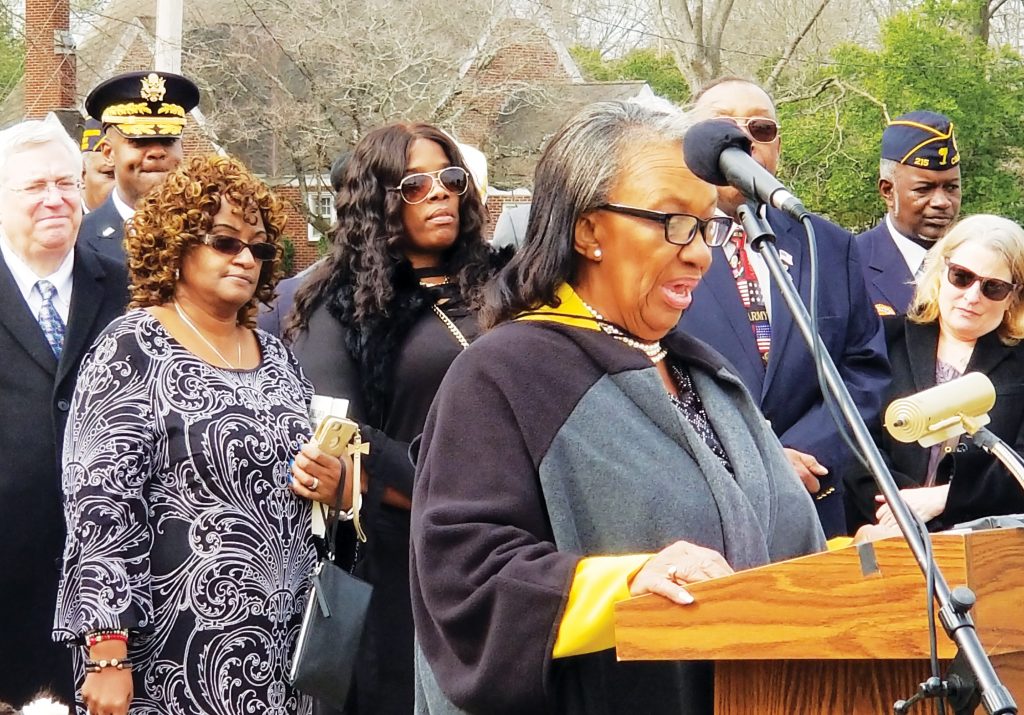
Fairfield County Councilwoman Bertha Goins reads a resolution from the County during a ceremony honoring Winnsboro native Sgt. Isaac Woodard. Behind her are Woodard’s nephew Robert Young (to Goins’ right) and his family. | Francine Goins
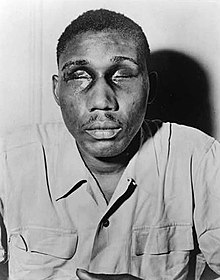
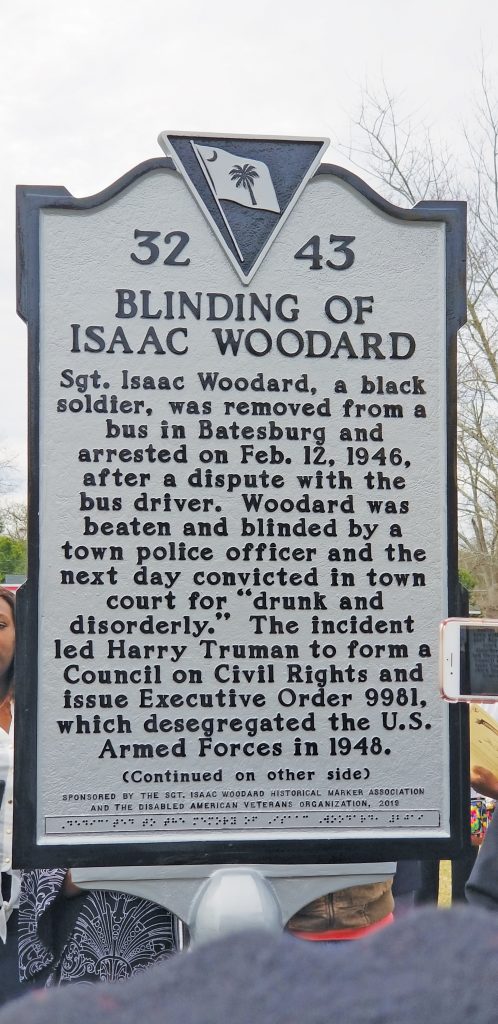
BATESBURG-LEESVILLE – A commemoration and unveiling of a historical marker in Batesburg-Leesville on Saturday honored Winnsboro native Sergeant Isaac Woodard, a World War II veteran whose savage beating at the hands of a callous, intolerant sheriff helped inspire civil rights in America.
Woodard
Fairfield County Councilwoman Bertha Goins, addressing Woodard’s nephew and his family along with a large group of dignitaries from across the state, read a resolution from the County, recognizing Woodard as an American hero. She also recognized his inhumane treatment as a catalyst in this nation’s civil rights movement.
In a letter read at the ceremony, Winnsboro Mayor Roger Gaddy wrote that he was honored to acknowledge the life of Woodard, recalling Woodard’s and his family’s years in Winnsboro.
After recounting the events surrounding Woodard’s brutal beating, Gaddy said, “It is with great honor that we are proud to see this historical marker be placed in Batesburg-Leesville to honor and acknowledge his life and service.”
A booklet at the commemoration titled the “Blinding of Isaac Woodard, Jr,” recounted the events that led up to Woodard’s blinding and to the eventual elevation of civil rights in the United States.
Isaac Woodard, Jr. was born in Fairfield County, but grew up in Goldsboro, North Carolina. He enlisted in the U.S. Army on Oct. 14, 1942, at Fort Jackson, and served in the Pacific as part of a labor battalion. Woodard received an Honorable Discharge at Camp Gordon, GA, in early February, 1946.
Along with a contingent of other discharged soldiers, black and white, Woodard boarded a Greyhouse bus on Feb. 12 to travel back home to North Carolina.
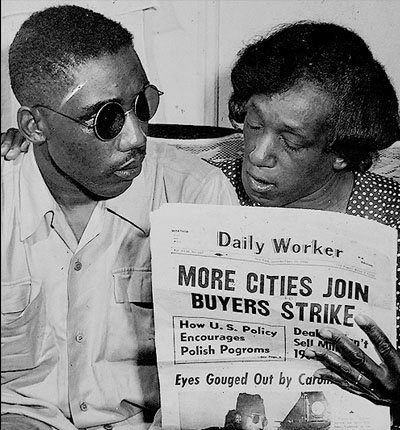
Isaac Woodard, Jr. with his mother
A conflict was triggered when the bus driver belittled the Army veteran for asking if there would be enough time for a bathroom break during a scheduled bus stop. It is reported that Woodard argued back. At the next stop, Woodard was met by Chief of Police Linwood Shull of Batesburg who, along with his deputies, beat Woodard savagely with their nightsticks.
Woodard was later charged with drunk and disorderly conduct before finally being taken to a veteran’s hospital in Columbia.
The NAACP took up Woodard’s case in the spring of 1946, pressing military officials to provide assistance to the gravely injured veteran while also calling for legal action against Chief Shull.
By September of that year, NAACP officials met with President Harry Truman who expressed outrage over this assault on a veteran. Shull was tried in federal court but released after the jury deliberated only 30 minutes.
As news of the attack circulated in the national media, President Harry Truman created the first President’s Committee on Civil Rights (PCCR) which published, ‘To Secure These Rights’ in 1947.
This groundbreaking report led to the desegregation of the military in 1948 and new federal attention to racial inequality as a matter of both domestic justice and out of concern for Cold War politics.
For many Americans, Isaac Woodard became a sympathetic figure representing the larger conflicts of Jim Crow emerging after World War II. The public’s response to the vicious attack upon Woodard, as well as the response of President Harry Truman, signaled a major shift in public support for civil rights during the 1940’s.
Isaac Woodard died on Sept., 1992 in the Bronx, New York where he lived with his nephew, Robert Young, and his family. But Woodard’s death was not the end of his legacy.
On June 7, 2018, Robert M. Cook II, Municipal Court Judge for the Town of Batesburg-Leesville, issued an order re-opening the case against Woodard and subsequently dismissed all charges against him. The order was granted upon receiving a request from Town Attorney Christian Spradly and Chief of Police Wallace Oswald.
The Town also moved to dismiss the charges against Woodard.
“It was a beautiful, emotional, meaningful ceremony,” Goins said. “It did not undo the crime, the injustice or the injury, but it brought well-deserved honor to this man who, through his pain and suffering, made so much possible for the rest of us.
“It was a privilege to be part of it,” Goins said.
A shadow of Ayden peaks playfully from behind his mom, sisters and grandmother, Bobbi Jackson Qualls of Ridgeway.
RIDGEWAY – In 2011, toddler Ayden Ferby was the youngest fatality on SC roadways. His death was the tragic result of not being properly restrained in his car seat.
Although Ayden’s life was short lived, his grandmother, Bobbi Jackson Qualls, now says there have been many lessons learned. To that end, her never-ending love – her family’s love – for Ayden has brought much good for other children since his death.
“As a result of us dealing with the grief and guilt of Ayden’s death, Ayden’s Turn was birthed,” Qualls said. “It was a way to do something for him, for his memory and for other children. We organized our first blood drive and car seat clinic in 2012 to bring awareness to the importance of proper installation and use of car seats. The goal was to educate the public on proper installation and best practices to use, to help reduce vehicular injuries and deaths of infants and children, in memory of Ayden,” Qualls said.
On Saturday, Qualls’ family has organized another blood drive, this time at Bethlehem Baptist Church in Ridgeway.
Ayden’s family and friends rally together through various campaigns year round – blood drives, car seat clinics, pamper parties, partnering with local law enforcement to educate the public on safety requirements while traveling and serving on the Buckle Buddies Coalition to advocate for changes in our state laws.
Ayden’s Turn has donated countless coats and shoes to children in Head Start programs and celebrate kid’s day events in the local schools and communities.
“We partner with other organizations like churches and civic groups to carry out our mission. To celebrate Ayden’s memory, we intentionally make child safety our first priority,” Qualls said. “As a result of Ayden’s tragic death and our broken hearts, we have made a difference in the lives of many, many other children.”
The next Ayden’s Turn blood drive will be held Saturday from 10 a.m. – 3 p.m. at Bethlehem Baptist Church, 330 W. Third St. in Ridgeway. To sign up, visit www.redcrossblood.org and enter sponsor code: Bethlehem. For more information, call Bobbi Jackson Qualls at 803-633-5033.
BLYTHEWOOD – Mt. Valley Road residents are asking the Blythewood Planning Commission to close off public access to the south side of the road from the Abney Hills area, saying the heavy construction traffic has nearly destroyed the only entrance to their homes.
Charles Bayne appeared before the commission Monday night to make the request after he said he had taken all the necessary steps to resolve the issue on his own with Essex Homes.
In his previous conversations with Frank Berry of Essex, Bayne said he had been promised that construction traffic would cease and that a ‘No Entrance’ sign would be placed at the secondary entrance to Abney Hills where the third phase of construction has been taking place.
Bayne said no sign had been placed by the time of the meeting, and that just one week ago he had seen a cement truck driving along the one and a half lane dirt road. He said the ruts caused by the heavy traffic makes for a driving disaster after a single day of rain.
“The county has had to come scrape the road twice since December and it has already become a slick clay mud hole again,” Bayne stated.
The biggest question that looms over Bayne’s struggles is the legality of the commission’s ability to block off the road. According to commission chairman Donald Brock, Mt. Valley Road is a private road with limits on who may access it, but also poses limitations to the authority of the town and county. Bayne said the county does have a maintenance agreement for the road, but that it only applies to scraping and some rock distribution upon request of the residents.
“What we have to collectively figure out is what can be done, legally, that will be satisfactory,” Brock stated.
One option that was tossed around during the meeting was to install a gate activated by a key or “squawk box” that would allow emergency vehicles access to the road under emergency circumstances.
Bayne and another resident who owns sixth tenths of the roadway agreed to the gate, but Bayne has no ownership in the road and he said he doesn’t know who else has ownership in it.
No action was officially taken, however, as Brock said he wished to give Essex Homes a chance to speak on the situation.
A representative of Essex is expected to appear before the commission next month.
BLYTHEWOOD – The Town’s annual Black History celebration is almost ready for its close-up on Feb. 23 at Doko Manor.
The program includes guest speaker Dr. Joe Kelly, performances by singer-songwriter EboniRamm, dance, choral and dramatic performances and a special display of African-American accomplishments.
Bobby Cunningham will emcee the event.
This year’s celebration will also feature several displays by vendors in the foyer.
In addition, the contributions of local churches to the Blythewood community will be recognized, and several presentations will be made to long-serving, senior members.
How it all started
In 1915, while attending a national celebration marking the 50th anniversary of emancipation, Carter G. Woodson realized that African American history and heritage were being lost. He began what became his life’s work – promoting the teaching of black history in the nation’s schools and communities. The first Black History Week took place in 1924, and President Gerald Ford declared the nation’s first Black History Month in 1975. It has been celebrated during February ever since.
The event is free and refreshments will be provided at the close of the ceremony. Organizers include Margaret Kelly, Lyn King, Doris Coleman, EboniRamm, Vii Sanders, Larry Griffin and Malcolm Gordge.
The event will be held at 1:30 p.m., Saturday, Feb. 23 at Doko Manor.
WINNSBORO – It’s been years since Fairfield county and municipal leaders first floated a concept of a regional water and sewer authority.
Now that its composition has been finalized, the group plans to chart new waters as it attempts to define and fulfill its mission of enhancing economic development in Fairfield County.
“Industry absolutely has to have basic infrastructure,” County Administrator Jason Taylor said. “The Town of Winnsboro and other entities need to come together because none of us can do it alone.”
On Tuesday, County Council unanimously approved a resolution approving the final composition of the water authority.
Winnsboro Town Council approved a similarly worded resolution last week.
The resolutions passed by the Fairfield and Winnsboro councils shave the authority board from seven to five members, drawing two Fairfield County representatives – Council Chairman Neil Robinson and Taylor. Winnsboro Town Manager Don Wood and Gaddy.
Kyle Crager, the authority’s fifth member, was jointly appointed by the county and town.
Ensuring Fairfield County has sufficient infrastructure is particularly important as it relates to the mega site off I-77, where sufficient sewer capacity doesn’t exist.
Taylor said new sewer lines potentially cost tens of millions of dollars more than water lines. The state recently awarded a $2 million grant for infrastructure design and prep work and though helpful, it’s only a fraction of what’s needed.
“The Town [of Winnsboro] has done a wonderful job in getting water infrastructure in place so we have sufficient water capacity. However sewer is much more expensive.” Taylor said.
As the authority board mulls ways to generate funds, other ideas were put forward at Monday night’s council meeting.
Ridgeway resident Randy Bright repeated his call for a penny sales tax to fund water and sewer upgrades.
“Infrastructure is an imperative,” Bright said. “If we had started this five years ago, we would already have $10 million that we could put forward to water and sewer to bring families, homes, industry new jobs and grow the economy.”
Councilman Jimmy Ray Douglas proposed taxing agricultural real properties that receive a tax break from the state.
Douglas proposed adding a $1 per acre tax on qualifying properties, which he said would generate $450,000 a year that could be applied to water and sewer expenses.
“I have ag land that I own and I’m paying next to nothing,” he said. “Everyone else who has less than five acres is paying a lot more taxes. I feel like every [agriculturally exempt] acre in Fairfield County needs to have an extra dollar in taxes on it.”
In South Carolina, agricultural real property is taxed at 4 percent of its fair market value. Non-agricultural property is taxed at 6 percent.
For the owner of property valued at $100,000, a Fairfield County landowner receiving the tax break pays $814 less than owners not receiving it.
Critics, however, say the exemptions unfairly benefit developers who claim the exemption on undeveloped property, most harvesting trees to technically qualify for the exemption.
The 2 percent tax break isn’t permanent. Once the land use changes, the rate rolls back to 6 percent and landowners are responsible for paying the difference, according to state law.
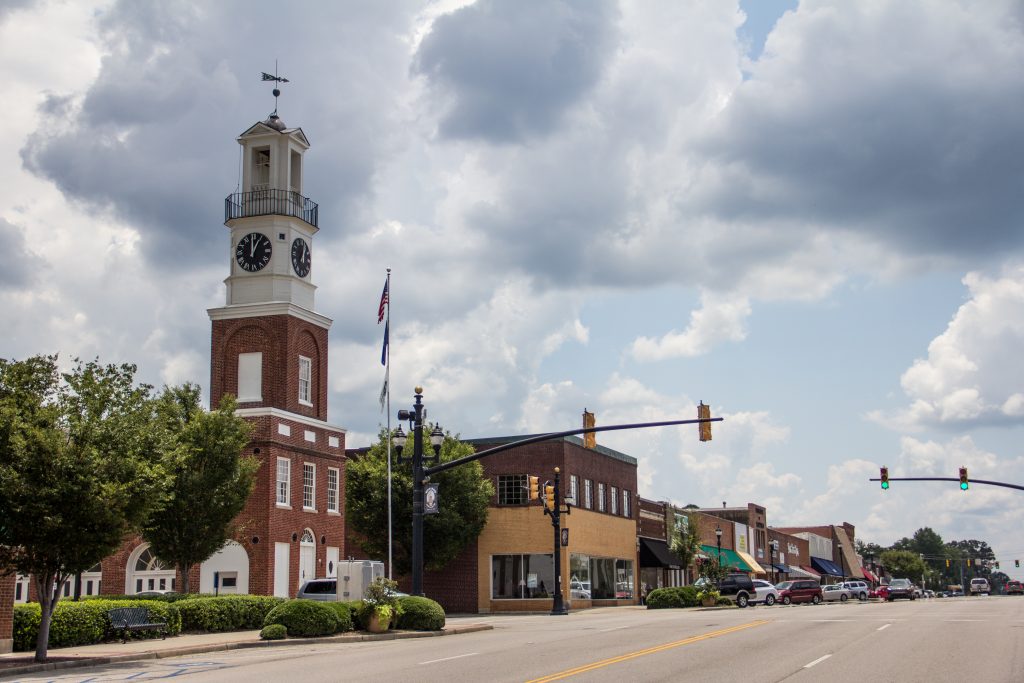
 Much of the 183 acre golf course property borders the Crickentree subdivision which is accessed off Kelly Mill Road.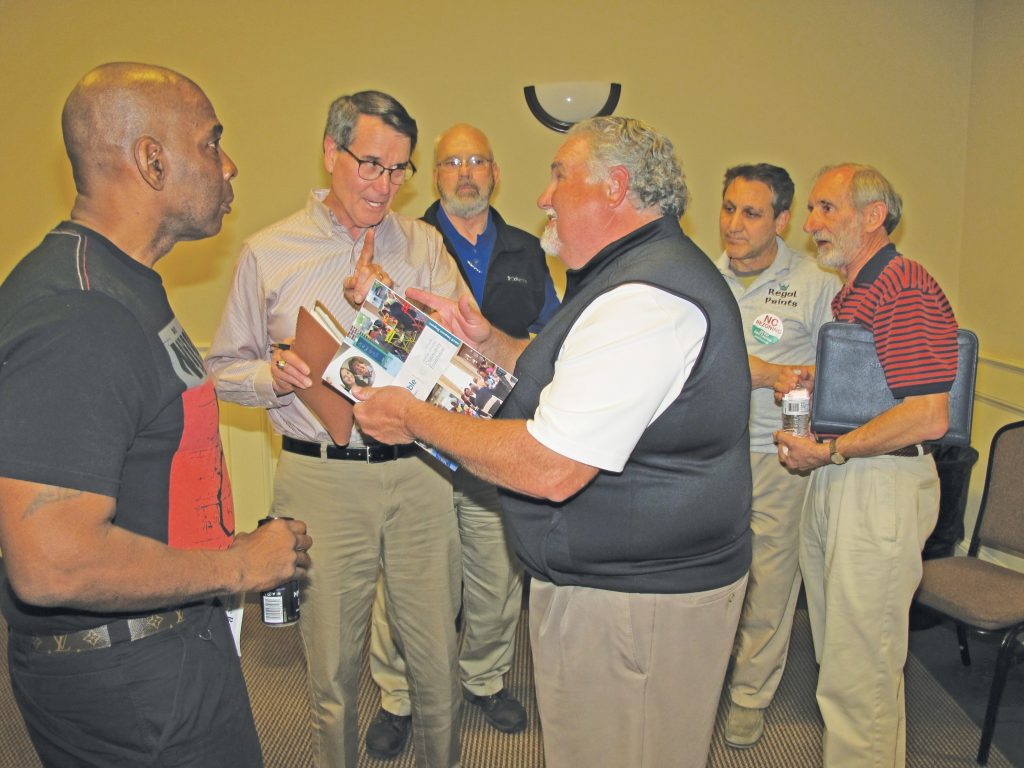


 This groundbreaking report led to the desegregation of the military in 1948 and new federal attention to racial inequality as a matter of both domestic justice and out of concern for Cold War politics.