Author: admin

  • Dogs attack, maul Winnsboro man

    WINNSBORO – A Winnsboro man was mauled Saturday by two dogs who were reportedly running loose on the former Mack Truck property off U. S. Highway 321 about 7 a.m. on Friday.

    A dispatcher notified Sheriff’s deputies that a man was on the ground with two dogs on top of him and another man was also on the ground.

    When deputies arrived, one man was trying to control a Rottweiler while another Rottweiler was being restrained on a leash by a third person in a car.

    John Emory Dinkins, Jr., 45, was lying on the ground with what deputies described as puncture wounds and deep bite marks where the skin was missing from his head, neck, back, both arms and both legs.

    EMS arrived and transported Dinkins to Palmetto Richland.

    Before he was transported, Dinkins reportedly told officers that he was walking in the north bound lane on U.S. Highway 321, going north, then crossed over to the south bound lane where some friends were to pick him up.

    Dinkins said that when he got almost in front of the Mack Truck building, he saw two dogs running towards him.

    He said someone was calling for the dogs to stop, but they kept coming and attacked him just south of the entrance to the plant, on the shoulder of the road. Dinkins said the dogs took him to the ground and began biting him. He said he tried to fight them off, but couldn’t, the report stated.

    Deputies on scene called the Fairfield County Animal Control who took the dogs to the county’s animal shelter.

    The dogs’ owner, Kenneth Floyd Anderson, 44, reported that he had brought the dogs to the property to exercise them. Anderson told deputies a different version, that Dinkins had approached him, causing the dogs to attack Dinkins, according to the report.

    As Anderson was trying to pull the dogs off and Dinkins was trying to fight them off, a passer-by came to their rescue and helped restrain the dogs, the report stated.

    The following day, deputies arrested Anderson and charged him with Allowing Dogs to Run At Large.

    Anderson was released on a $158.75 personal recognizance bond.

  • Supers take home top pay, benefits

    COLUMBIA – Public education isn’t the most profitable profession in South Carolina.

    For a select few, however, the field can be quite lucrative.

    In a state where the governor earns $106,078 a year and agency heads like the state superintendent of education make $92,007, many district level school superintendents rake in two to three times that amount.

    That’s the case in Fairfield and Richland counties, where superintendents take home considerably more compensation than state agency heads accountable to 5 million South Carolina residents.

    Throw in generous retirement plans, copious car allowances, travel and other high end perks, and total superintendent annual compensation pushes well past $200,000. For Fairfield Superintendent Dr. J. R. Green, with responsibility for eight schools, it’s in the neighborhood of $225,000. For Richland Two Superintendent Dr. Baron Davis, with the responsibility of 32 schools, the pay and benefits bring in about $260,000.

    And it’s all subsidized with taxpayer money.

    Meantime, teacher pay has continued to lag.

    In 2018, Fairfield County School District teachers averaged $49,288 and Richland Two teachers averaged $51,802, South Carolina district report cards state.

    Teachers’ salaries in both districts fall well short of the national average of $58,950, according to figures from U.S. Department of Education.

    Swelling superintendent pay has become a nationwide trend, with some superintendents being paid close to $400,000, according to a January 2019 report by the American Association of School Administrators, or AASA.

    Salary Rises, Attendance Falls

    “Often times the superintendent is the highest paid member in the community,” Noelle Ellerson, an associate executive director with AASA, said in a video on the group’s website.

    Since 2012, salaries of superintendents in the Midlands have risen considerably faster than student growth.

    Green has seen his base salary climb 23 percent since 2012, rising from $140,000 to $182,287, contract documents show. In the same period, the district’s student population has dropped 15 percent, decreasing from 3,108 to 2,641, according to South Carolina school report cards.

    Richland Two’s student population has increased since 2012, but at a notably slower rate than superintendent salaries, public records show.

    Davis’ starting base pay was $186,312, according to his initial superintendent contract dated July 25, 2016. He now earns $191,904. The pay increase is more than double the Richland Two student enrollment growth of 9.85 percent (25,964 to 28,503) in the same period.

    Davis’ contract says as of July 1, 2018, he was entitled to annual salary increases equal to the “average rate of percentage increase” that the district’s certified employees receive.

    The board awarded him a 2.5 percent increase in September 2018.

    Green is among the highest paid superintendents nationwide for districts of Fairfield’s size, according to the AASA report. His base salary of $182,287 is well above the AASA median of $167,444 for male superintendents in districts with 2,500 to 9,999 students. But Fairfield’s 2,641 student population is near the bottom of that AASA range of student enrollment.

    Green’s pay is closer to the 75th percentile of education chiefs who make at least $193,000, according to the AASA report.

    Davis’ base salary technically falls below the median for large districts based on AASA findings. However, the AASA classifies any district with more than 25,000 students as large, lumping Richland Two, at 28,503 students, with the nation’s largest districts, many of which have between 100,000 and 1 million students. These upper echelon districts pay between $340,000 and $400,000 a year, according to U.S. Department of Education figures.

    According to a March, 2018, report in the New York Daily News, the New York City school district, the nation’s largest, pays its superintendent $353,000, about $100,000 more than Davis is paid. In South Carolina, the state’s largest three districts – Greenville (75,471 students) Charleston (48,937) and Horry (44,669) – are substantially larger than Richland Two and pay their superintendents around $225,000 a year in base pay, according to S.C. Ethics Commission filings.

    Defending Supers’ Pay

    William Frick, chairman of the Fairfield County school board of trustees, said Green is fairly compensated. He said Green brings a long list of qualifications to Fairfield County.

    “[Superintendents] are paid well, but they have a difficult job to do,” Frick said. “They are compensated accordingly.”

    Richland Two board chair Amelia McKie couldn’t be reached for comment about Davis’ compensation package. However, in a Sept. 15, 2018 letter summarizing Davis’ performance, McKie spoke very highly of him.

    “You have done an excellent job developing the District’s culture and creating the expectation that the District and all of our schools will be ‘premier,’” McKie wrote. “You exhibit excellence at all times, and we would like to see all departments throughout the District reflect your commitment to excellence, professionalism and customer service.”

    Evaluating Green

    The board voted on Dec. 18 to extend Green’s contract to 2024. Board member Paula Hartman raised concerns about extending it so far into the future.

    “I really don’t understand the reasoning – not saying there are any objections – but most districts have three-year contracts,” Hartman said. “I don’t understand why we continue to keep it at six years.”

    Frick said prior to hiring Green, the district has had a history of struggling to retain superintendents.

    “I’m happy that we have the opportunity to have an amendment to extend it out one more year. I’m glad we can essentially tie him down for another year,” Frick said.

    Green said he views the board’s extending of his contract as an affirmation of his performance.

    “When the board says it wants to extend my contract, that says you’re interested in having me for the long haul,” Green said.

    The superintendent went on to say that a year ago, he put a letter into his file saying that regardless what the board did, his salary should remain the same.

    “I felt that I was fairly compensated,” Green said. “I wanted the focus at this point to be on salaries of the staff.”

    However, Green’s contract states that he is automatically entitled to salary and benefit increases every time his contract is extended, provided he receives at least a “satisfactory” rating on his performance evaluations.

    The superintendent evaluation form the Fairfield board of trustees currently uses, and which contains only five two-word categories to be evaluated, doesn’t feature “satisfactory” as a rating, but instead uses “needs improvement,” “proficient” and “exemplary.”

    In December 2018, Fairfield board members rated Green as “exemplary” in almost every category. One board member rated Green as proficient in Leadership and Learning Environment, but exemplary in the others.

    “I enjoy working with Dr. Green,” one board member wrote. “We need make it harder [sic], going too good!”

    Green’s raises started at 3 percent in 2013, increased to 4 percent in 2014, and rose to 5 percent in 2015, documents show.

    Green can now receive an automatic 5 percent pay increase every year forward so long as he receives at least a “satisfactory” rating, according to his contract.

    Neither his salary or benefits are tied to student performance, test scores or enrollment.

     R2 Evaluations Mixed

    Davis’ second contract, a three-year contract, took effect July 1, 2017 and expires June 30, 2020. In September 2018, after his most recent annual review, Davis’ contract was extended a year to 2021 to keep it at three years. Davis received generally positive reviews during his evaluation.

    Collectively, the board gave Davis a score of 142 out of 150 possible points, earning him a “distinguished” rating, the highest rating possible.

    Two board members opted to submit individual evaluations.

    Board member James Manning gave Davis a perfect score of 150, according to district documents obtained through the S.C. Freedom of Information Act.

    Board member Lindsay Agostini was more critical.

    Her individual evaluation marked Davis down in several areas, characterizing him as defensive, antagonistic and expressing “difficulty recognizing a problem or concern with constructive criticism,” evaluation forms state.

    One area of defensiveness Agostini raised involved a disagreement over the elimination of keyboarding as a class.

    Agostini also said Davis gave “antagonistic responses” during a bond referendum presentation at an event sponsored by the Bethel-Hanberry Alumni Association.

    “The following day, prior to the start of executive session on August 28, 2018, the superintendent acknowledged and apologized to the board for his actions,” the evaluation stated.

     Benefits Boost Pay

    Superintendent compensation extends well beyond base salary.

    In Fairfield, Green’s original contract called for the district to provide an annual annuity contribution equal to 4 percent of his salary, which in 2012 amounted to $5,600.

    In 2014-2015, the board amended Green’s contract to increase the annuity contribution to 8 percent. Now it automatically increases 2 percent every year the contract remains in effect.

    Today the district pumps $29,165 per year into Green’s annuity, documents state.

    Besides the usual perks of paying for moving expenses, other benefits include $100,000 of term life insurance, free cell phone use and free use of an automobile that’s fully maintained by the district. The invoice for the last full maintenance on his automobile last fall came to $1,800 according to district records.

    The district also pays Green’s car insurance, and he receives two weeks of paid vacation on top of legal holidays and other school holidays. The district also paid for his professional memberships into the AASA, the South Carolina Association of School Administrators (SCASA) and other professional groups and local service clubs.

    In the event the board terminates the contract, Green is entitled to 18 months pay which would currently come to about $275,000.

    R2 Benefits Add Up

    In addition to Davis’ base salary of $192,104, the district makes an annual retirement contribution of $43,261 on Davis’ behalf. The district also pitches in $6,717 in annual annuity payments calculated at a rate of 3.5 percent of his annual salary based on a “satisfactory” evaluation, documents state.

    Davis essentially doesn’t pay for travel. Richland Two covers $18,000 a year in travel payments for Davis, covering commutes to virtually anywhere in the Midlands, essentially backfilling his take home pay with compensation not available to most other employees.

    Davis can also request reimbursement from the district for travel outside the Midlands or out of state if it’s for reasons benefiting the district.

    Other perks include $760 in payments for a $250,000 term life insurance policy and $768 for cell phone use, both funded annually by the district.

    Counting these benefits, Davis’ total compensation is in excess of $261,000.

    Beyond that, Davis receives other perks – 20 vacation days per year, plus legal and other holidays recognized by the district. He’s also entitled to receive pay for unused sick leave, annual leave and vacation days in an amount that’s “consistent with Board policy.”

    In addition, the district pays for Davis’ memberships in the AASA, SCASA, the Rotary Club, “and any other reasonable and customary professional group memberships for which the Superintendent believes is necessary to maintain and improve his professional skills.”

    Davis’ contract has been amended twice.

    In July 2017, his monthly automobile allowance increased by $1,500 a year.

    A year later, Davis’ salary increased to its current figure. His annuity contribution also rose from 1.5 percent to 3.5 percent of his annual salary, and this September it will increase again to 6 percent.

    Salary, Benefits and Ethics

    Documents showing the salaries and compensation of Green and Davis were obtained through S.C. Freedom of Information Act requests.

    In requesting the documents, The Voice asked not only for both superintendents’ salaries, but also their contracts, any amendments, and documents listing total compensation, including retirement benefits, vehicle allowances and other supplemental income backfilling personal expenses a typical person would ordinarily incur.

    Green’s contract has been amended six times in seven years (since 2012), most recently in December 2018. Dr. Davis’ contract has been amended twice during his nearly three-year tenure.

    S.C. superintendent salaries are available for public inspection on the S.C. Ethics Commission’s website.

    State law requires superintendents to file annual Statements of Economic Interest, or SEI, forms. The forms are supposed to document the “source, type, and amount or value of income received from a governmental entity by the filer or a member of the filer’s immediate family,” according to the ethics commission website.

    Citing state law, an ethics commission spokesperson further defined “income” as “anything of value received, which must be reported on a form used by the Internal Revenue Service for the reporting or disclosure of income received by an individual or a business.

    “Income does not, however, include retirement, annuity, pension, IRA, disability, or deferred compensation payments received by the filer or filer’s immediate family member,” the law states.

    Some superintendents are thorough in their filings.

    Burke Royster, the superintendent of Greenville County Schools, and one of the highest paid education chiefs in the state, reported his $247,000 salary and several benefits on his SEI form.

    Other superintendents, however, don’t report their total compensation to the ethics commission.

    On his SEI forms, Green only reported his base salary from year to year. He didn’t list any annuity payments, his district-provided automobile or other perks.

    Davis listed his travel compensation, but nothing relative to retirement payments.

  • Update: R2 board member claims harassment

    Bender: “Public officials have to expect feedback from constituents.”

    COLUMBIA – Another spat involving a Richland Two board member and law enforcement is further fueling criticisms of elected officials already marred by mounting ethical and legal issues.

    Columbia area resident Gus Philpott is identified as the subject in a harassment complaint he says Richland Two board member Teresa Holmes recently filed with the Richland County Sheriff’s Office.

    In recent public meetings, Philpott has called for Holmes and board chair Amelia McKie to step down from their seats for failing to file Statements of Economic Interest, an ethics form required by state law.

    South Carolina elected officials are required by law to file SEI forms before taking the oath of office. Violations are punishable by up to 30 days in jail or a $5,000 fine, according to the S.C. Code of Laws.

    Instead, it was Philpott who recently found himself facing a potential legal entanglement.

    “I was home Thursday afternoon around 3 o’clock when the phone rang,” Philpott said. “[A sergeant] called me from the sheriff’s department and he told me that he had a report about harassment that had my name in it.”

    Philpott met deputies at the sheriff’s office. After hearing Philpott’s side, deputies told him that he didn’t commit harassment, Philpott said, and was not charged.

    Holmes declined to comment when asked why she filed the report.

    “When there are legal issues or potential pending further legal issues or additional actions pending, I have been advised not to comment by my attorney,” Holmes said. “The public needs to know that I am in compliance with the State of South Carolina and I am not now or never have been in danger of going to jail nor facing a $5,000 fine as alleged.”

    In a post on The Voice’s website, Philpott wrote: “While filing her Statement of Economic Interests on Dec. 4, 2018, did get her into good standing with the S.C. Ethics Commission, it did not validate the oath of office that she took on Nov. 13, 2018. She must now take the oath of office.”

    In response to a request from The Voice for the police report that Holmes filed, the sheriff’s office provided a heavily redacted report that shielded virtually all information about the complainant and subject from view.

    Asterisks fill the fields normally reserved for the complainant’s and subject’s name, phone number, age, gender and ethnicity.

    Jay Bender, a media law attorney representing the S.C. Press Association, said there’s no legitimate reason to redact an elected official’s name from an incident report, especially when it’s the official who filed it.

    “You don’t lose all of your rights when you become a public official, but you certainly lose the right to be anonymous,” Bender said. “You certainly lose the right to file a criminal complaint because you don’t like what someone is saying.”

    Bender further said it’s “nonsense” for a public official to file a harassment report against a constituent attempting to discuss public policy matters.

    “All he’s doing is calling on a public official to follow the law,” Bender said. “When you offer yourself for public office, you have to expect feedback from your constituents.”

    Legal issues have haunted Richland Two board members since December 2018 when The Voice began investigating unfiled ethics reports by a majority of members.

    Six of seven board members failed to file either quarterly campaign finance reports or SEI forms, public records state.

    A Richland Two board member has also been criminally charged following an altercation that occurred shortly after the Jan. 22 board meeting adjourned.

    Board vice chair Monica Elkins- Johnson has been charged with disorderly conduct. She remains free on bond and a trial date hasn’t been set.

    Police reports state that the suspect was yelling, cursing and issuing threats. A sheriff’s office news release stated that Elkins-Johnson “did attack several individuals,” and cursed and threatened them.

    At the March 12 board meeting, a week before the harassment report was filed, Holmes said she has  taken responsibility for not filing her SEI forms on time.

    She went on to say she thinks board member ethics issues have become sensationalized.

    “I’m not going to be one of those board members that sits by idly and accepts when things are done for personal reasons, or things are being done to be sensationalized,” she said. “I don’t like being used for personal reasons of other people.”

    The harassment report states the incident occurred between March 11 and March 20. The report does not specify how anyone was harassed.

    “C/V (School Board Member) came into the RCSD to report that a man that has approached her at several Richland County School Board meetings is harassing her,” the report states. “C/V said she feels threatened by subjects [sic] behavior.”

    The report accuses Philpott of approaching the board member at meetings and also by sending her several emails that attack her.

    Philpott said he’s personally spoken to Holmes only once at a board meeting and described the conversation as cordial. He noted he only emails the entire board, and not any member individually.

    “If they are in a public place and at a public meeting, they have no expectation of privacy,” Philpott said.

    Philpott said ethics compliance is important because board members handle heaps of taxpayer money. He also said their votes impact non-monetary matters, citing recent 4-3 board votes on student appeals.

    At a meeting in February, the board also voted 4-3 against a proposed policy that would sanction board members when there’s “cause.” Holmes and McKie voted against the measure.

    Philpott said those votes would’ve flipped the other way had the board followed state law by not allowing Holmes or McKie to serve for not filing 2018 SEI forms by the March 30 due date.

    Neither filed their forms until December 2018, S.C. Ethics Commission records show.


    R2 board member files harassment report with Sheriff’s office against Blythewood resident

    COLUMBIA – A female member of the Richland Two school board has filed a harassment complaint against a private citizen who’s previously criticized board members for violating state ethics laws.

    Blythewood area resident Gus Philpott said the Richland County Sheriff’s Office telephoned him last week to notify him of the complaint.

    “I was home Thursday afternoon around 3 o’clock when the phone rang,” Philpott said. “[A sergeant] called me from the sheriff’s department and he told me that he had a report about harassment that had my name in it.”

    Philpott said he went to the sheriff’s office, where he spoke with two deputies who asked him to give his side of the story. He said they later told him he didn’t commit harassment and he wasn’t charged.

    All information about exactly who filed the report is hidden from the public in the report. Asterisks fill the fields normally reserved for the complainant’s name, phone number, age, gender and ethnicity.

    Philpott believes Richland Two board member Teresa Holmes filed the report.

    At previous board meetings, Philpott, among others, has called for Holmes and board chair Amelia McKie step down from the board for failing to file Statements of Economic Interest, an ethics form required by state law to be completed before a person elected to the school board can take office.

    Jay Bender, a media law attorney representing the S.C. Press Association, said there’s no legitimate reason to redact an elected official’s name from an incident report.

    He said it’s especially egregious when an elected official files a report against a constituent over political disagreements.

    “You don’t lose all of your rights when you become a public official, but you certainly lose the right to be anonymous,” Bender said. “You certainly lose the right to file a criminal complaint because you don’t like what someone is saying.”

    Holmes declined to comment when asked why she filed the report.

    “When there are legal issues or potential pending further legal issues or additional actions pending; I have been advised not to comment by my attorney,” Holmes said.

    3/26/19

  • Council adopts tourism, hospitality taxes

    WINNSBORO – In a series of 4-1 votes, County Council members approved final readings of ordinances that establish a new tourism development fee, a hospitality tax and business registration fee. The ordinance taxes and fees will not go into effect until summer.

    Councilman Douglas Pauley voted against all three measures, including amendments that deferred implementation until July 1.

    Council members Bertha Goins and Mikel Trapp were absent for the vote.

    After the meeting, Pauley said he didn’t oppose implementing the taxes.

    However, he felt there was room for more discussion about the ordinances, including attentional impacts on residents and local merchants.

    “I just think that there was still a lot of uncertainty,” Pauley said. “I think there were two citizens who came to speak in public input at the last meeting, and they were here again tonight seeking clarification on how the money would be spent.“

    The tourism development fee increases by three cents the sales tax on stays at hotels, motels and other lodging in the unincorporated areas of Fairfield County. It will remain in effect for the next 20 years, according to the ordinance.

    Money raised by the tax, which functions more like an accommodations tax, can be spent for the following purposes:

    • Investigating the feasibility of the construction of public meeting facilities
    • Construction of public meeting facilities
    • Other enhancements to services used by tourists delegates within or outside the County of Fairfield

    The local hospitality fee adds two cents of tax to prepared foods, such as restaurants. It will also last for the next 20 years.

    Revenues will be spent on the following purposes:

    • Tourism related capital projects
    • The support of tourism and tourist services in a manner that will best serve the tourists from whom it was collected.
    • Money can also be used “as a funding source to pay indebtedness issued by the County for public purposes,” the ordinance states.

    Fairfield County’s business registration fee adds a nominal flat fee of $15 that businesses will pay annually.

    The fee’s purpose is mainly one of accountability, giving county leaders a more accurate accounting of who’s doing business in Fairfield.

    Residents continued to express mixed feelings about the new taxes and fees at Monday’s meeting.

    Fairfield County resident Chris Griffiths thought the county should be doing more to market I-77 as a way to attract industry. He questioned whether there is sufficient workforce to support all of the industry the county is trying to attract.

    “I have nobody coming to my business asking for work, even for a minimal, push a broom [job],” he said. “With a hospitality tax, you’re taxing the citizens of the county; you’re not taxing the tourists.”

    Ridgeway resident Randy Bright said he agreed there was some lingering confusion over the taxes, but still believed they were needed to help Fairfield County to combat blight.

    “In concept I support these ordinances because we have to do things differently in Fairfield County,” Bright said. “Investment through revenue is the way to go.”

    Council members have said similar taxes already exist in most other South Carolina counties.

    “Fairfield County is one of the very few counties in the state that does not have a hospitality tax,” said Councilman Jimmy Ray Douglas. “We need it because of industry. We are not going to have industry until we get a sewer plant built.“

    Councilwoman Bertha Goins, who later joined the meeting via speakerphone, said enhancing water and sewer services is the foundation of improving quality of life and attracting industry. She thinks the new fees will help Fairfield achieve those goals.

    “We have to start using what we have now to get to that point,“ Goins said. “It is necessary and it will work if we allow it. New changes are sometimes hard to do but they can be extremely beneficial and they work if we allow them to.“

  • Crickentree residents to plead case before PC

    BLYTHEWOOD – A request to rezone the former Golf Course of South Carolina property from Traditional Residential Open Space (TROS/RURAL) to Medium Density (RS-MD) is set to be heard by the Richland County Planning Commission on Monday, April 1, at 3 p.m.

    The property is owned by Texas investment firm E-Capital which purchased the mortgage on the now foreclosed golf course last August. The 183-acre property consists of two parcels and borders the Crickentree subdivision with access to Langford Road. Cricketree subdivision is accessed off Kelly Mill Road.

    Attorney Robert Fuller, representing Texas investment firm E-Capital, is expected to ask the Planning Commissioners to recommend MD zoning to Richland County Council with the promise to build only 249 homes. That number is down from 480 homes he proposed last fall.

    But at a joint meeting of the residents and E-Capital in February, Richland County Zoning Administrator Geonard Price explained that no matter how few homes the developer promises to build, he will be allowed to build up to 949 homes on the property under the requested MD zoning if it is approved.

    E-Capital representatives have told residents that E-Capital does not plan to develop the property, but sell it to a developer.

    Crickentree neighbors, who have met on three occasions with E-Capital since last Fall, say they fear the rezoning to higher density  will lower the value of their homes and increase what they say is already intolerable traffic congestion in the Blythewood area.

    The County’s administrative planning staff (employees) have recommended that the Planning Commissioners, who are appointed by Council, approve the rezoning.

    According to the planning staff’s zoning district summary, the minimum lot area for RS-MD zoning is 8,500 square feet. Based on a gross density calculation, the maximum number of units for the site is approximately 949 dwelling units.

    The planning staff, in recommending approval of the RS-MD zoning for the golf course, states that the proposed zoning is consistent with the 2015 County Comprehensive Plan that designates this area as Neighborhood Medium Density.

    However, the planning staff also concludes that approval of the request for RS-MD zoning may promote a housing density that is not consistent with that of the established and proposed developments of the adjacent and promote subdivisions (Hunters Run, The Park at Crickentree and Crickentree.

    Planning Commission’s vote to approve or disapprove will only be a recommendation to County Council which will then hold a public hearing and first vote on April 23. This is the only time residents will be allowed to speak to the issues. If the vote passes to rezone the property, there will be two more votes in May and June.

    To address the Commission at the April 1 meeting, citizens should arrive about 15 minutes early (12:45 p.m.) to sign up on the speakers list, ‘for’ or ‘against’ the rezoning. No one can sign up after the sign-up sheets are picked up.  The meeting is held in Council chambers in the County building at 2020 Hampton Street in Columbia. For more information, call the County ombudsman at 929-6000 to direct your call to the planning staff or Concerned Citizens of Crickentree at 803-719-1242 or visit SaveGolfCourses.com

  • Cedar Creek church dedicated

    CEDAR CREEK – What began as a plan for growth eight years ago became reality for the members of Cedar Creek Baptist Church when they dedicated their new building on March 17. The 5,762 square-foot building, according to Deacon Jim Chappell, is a single purpose sanctuary that seats 295.

    “We are going to renovate our previous building to house classrooms, a conference room/library and other rooms,” Chappell said. “We plan to keep the choir loft for choir practice and add two classrooms.”

    The building was constructed by Construction Services out of Lexington.

    The church, whose members number about 200, was organized after a vision for a local Baptist church in the Cedar Creek community by member Jim Tuten. Twelve families began meeting on Oct. 7, 1979 at the Cedar Creek Grange Hall. A new facility was built in 1983 on Cedar Creek Road on land donated by the Joseph W. Dubard family. Additions were added to the building in 1991.

    “We look forward to the future,” member Sandra Jones penned in the church history book, “one of glorifying God and being a beacon of light for Him in our community.”

    The church is located at 1920 Cedar Creek Road in Blythewood.

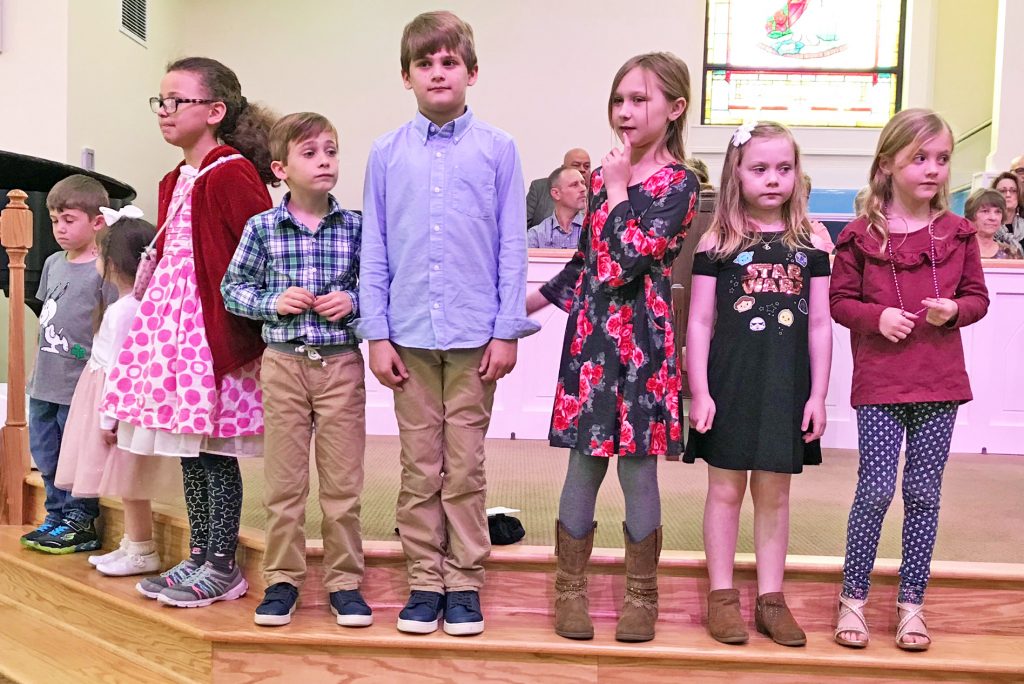
    The church’s children’s choir performed during the dedication service on March 17. From left: Benjie Ballentine, Jaidah Davis, Alexis Craft, Wyatt Duren, Clark Duren, Maddy Meetze, Ivy Greg and Emma McEntire.
  • McNulty’s taproom brings the music to town

    Hayes, back center, joined Fairfield Animal Shelter volunteers Sam Yaghi, Dawn Branham and Sonja Murphy and their rescues; Taproom owner Larry ‘Trippy’ Phillips and Tumbleweed with 97.5 WCOS.

    BLYTHEWOOD – It was a full house Friday night at McNulty’s Taproom when country music singer Wade Hayes took the stage in the main dining room. The evening kicked off with Hayes visiting with fans out front under the WCOS tent during a fundraiser for the Fairfield Animal Shelter from 6 – 8. At 9 p.m., the restaurant’s chef and his band, the Yarborough Brothers, opened the big show and Hayes followed.

  • 17 Years of Service

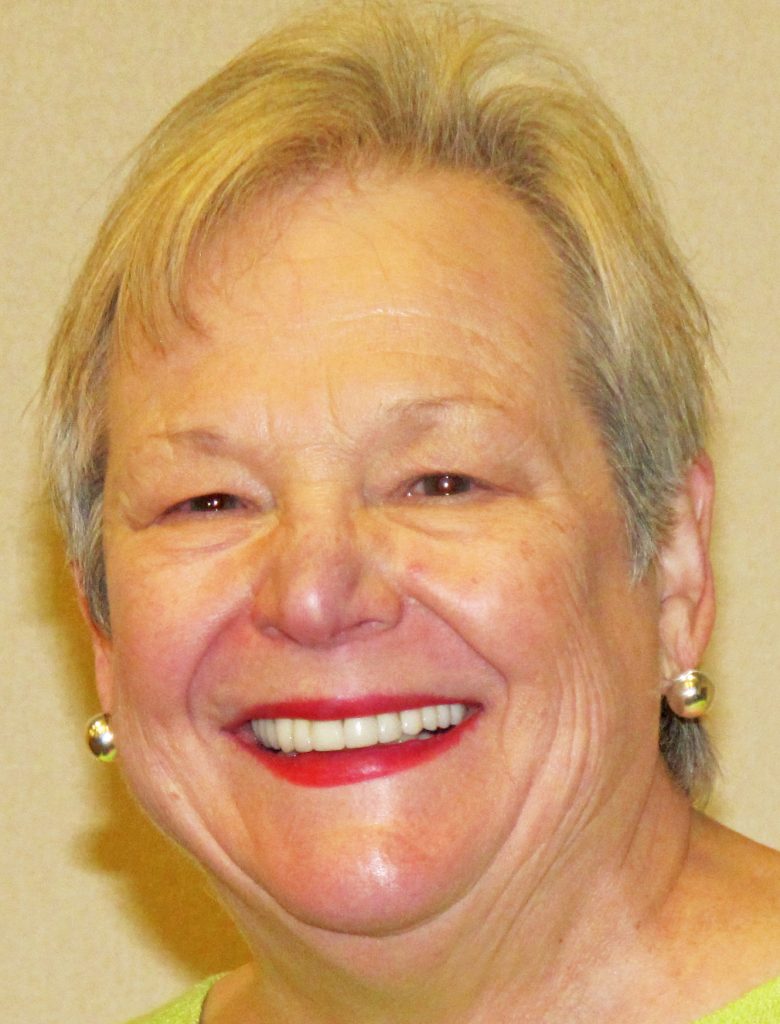
    DuBard

    COLUMBIA – Lifelong Blythewood resident Margaret DuBard was honored recently by the Richland County Council for her 17 years of service on the County Conservation Commission. DuBard, who lives in Cedar Creek, was a member of the founding Board of Directors and the first vice-president of the Commission.

  • Community supports Jenni Sharpe Memorial

    Family members of Jenni Sharpe: Shannon Caldwell (kneeling) with son Tripp, Heath Caldwell, standing left, Johnny Caldwell, Cheryl Caldwell, holding Molly Claire Caldwell, and Ryan Sharpe with son John Ryan. | Photos: Martha Ladd

    WINNSBORO – Community members from all over Fairfield County turned out to support the third annual Jenni Sharpe Memorial 5K on March 23.

    Zy’hon Young, Geiger student

    The event, which funds scholarships for Fairfield County seniors, was initiated after Winnsboro native Jenni Caldwell Sharpe passed away from cancer in 2016.

    Jenni, a graduate of Richard Winn Academy, and her husband Ryan Sharpe, an alumnus of Fairfield Central and current teacher and coach, looked for opportunities to give back to the community that supported them during Jenni’s diagnosis and treatment.

    Ryan saw the memorial as a means to meet that goal in two ways: the event would bring community members together and give back by supporting local students.

    In its first two years, the fundraiser provided $12,000 of scholarships to graduating seniors at Fairfield Central and Richard Winn. Donations are still accepted. To give online, visit PayPal.me/JSharpe5K.

  • Saving Lives

    WINNSBORO – Approximately 10 health care vendors were available on Saturday at the Free Fairfield County Health Fair, sponsored by U.S. Congressman Ralph Norman at the Fairfield County Parks and Recreation Center from 9 a.m. – 1 p.m.

    Representing Providence Health’s new ER facility in Winnsboro were, from left: registered nurses Arlene Vance and Robin Gilbert, who are shown above providing information and mini first aid kits to Jarvis Ballinger, Trista Davis and Saya Lyles. Doctors, nurses and other health care personnel were on hand to take blood pressure, conduct other health screenings and dispense nutritional and dietary advice.

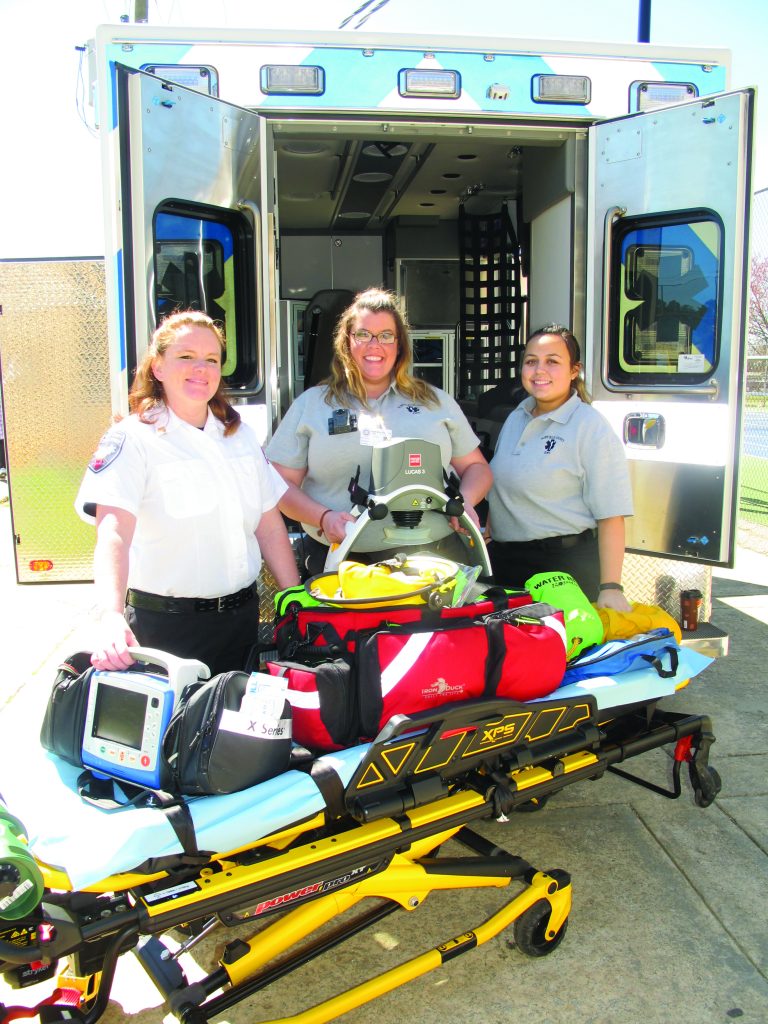
    EMS Paramedics Natalie Rhodes and Christy Claytor and intern Mia Shami gave tours of an EMS truck and explained various pieces of life-saving equipment. | Photos: Barbara Ball