Author: admin

  • Broken JWC line prompts ‘boil’ order

    JENKINSVILLE – Jenkinsville Water Company has fixed a water line break, though how long water service remained shut off remains a little murky.

    Laura Renwick, spokeswoman for the S.C. Department of Health and Environmental Control (DHEC), said complaints of low water pressure began late in the day on Thursday, May 27. A break occurred the next day.

    “A break in the line was found on May 28, and a boil water advisory was issued by the utility that same day,” Renwick wrote in an email. “Repairs were made to the system also on May 28.”

    In a telephone interview, JWC president Greg Ginyard confirmed to The Voice that water line was repaired on Tuesday, May 28.

    Renwick with DHEC said that on May 30, the utility followed up by collecting samples, which “came back in the normal range,” and the boil water advisory was lifted.

    “No action is being taken by the Department,” Renwick said.

    Ginyard said there are no problems with Jenkinsville water. He said whenever there’s a complaint, it’s investigated and typically no problems are found, and if a problem is discovered, it’s promptly fixed.

    “There’s nothing wrong with our water,” Ginyard said. “The Jenkinsville Water Company is not giving anybody bad water. All our water is potable. We’re fine, we don’t have any problems.”

    In the past, the JWC has faced questions over its water quality.

    In March, The Voice and The State newspapers published investigative reports about Jenkinsville water quality.

    Public records The Voice obtained from DHEC state the JWC was cited three times in the past five years. The last time was in 2016.

    Fairfield County Councilwoman Bertha Goins has also raised water quality issues, specifically relating to Jenkinsville, landing her in hot water with JWC’s legal counsel.

    In March, attorneys for the JWC threatened to sue her, issuing a cease and desist order.

    “If you continue to make such false and defamatory statements, I have been instructed to take all legal steps to enforce my client’s rights including filing suit against you, for injunctive relief, slander and defamation seeking all damages allowed by law,” JWC lawyers stated in a letter.

    Goins has said the JWC is trying to stifle her right to free speech. At the April 8 council meeting, she said in a prepared statement she blamed her husband’s illness in part on Jenkinsville water.

    County Attorney Tommy Morgan, acting in a private capacity, authored a response letter to JWC attorneys, saying Goins “categorically denies” making false and defamatory statements, and that she has a right to free speech.

    “This threat of legal action is not going to stop Ms. Goins,” Morgan said.

    Jenkinsville Water Company has also claimed Fairfield County was trying to coerce the water company into joining the recently created Fairfield County-Town of Winnsboro water authority.

    “JWC has no interest in being absorbed by a bigger water system,” the JWC said in a letter to its members. “When smaller water companies are taken over by a larger water system that historically results in rate increases between 100% and 150%. We are committed to not letting this happen to JWC members.”

  • Doko Depot sale nets $163,874

    Doko Depot

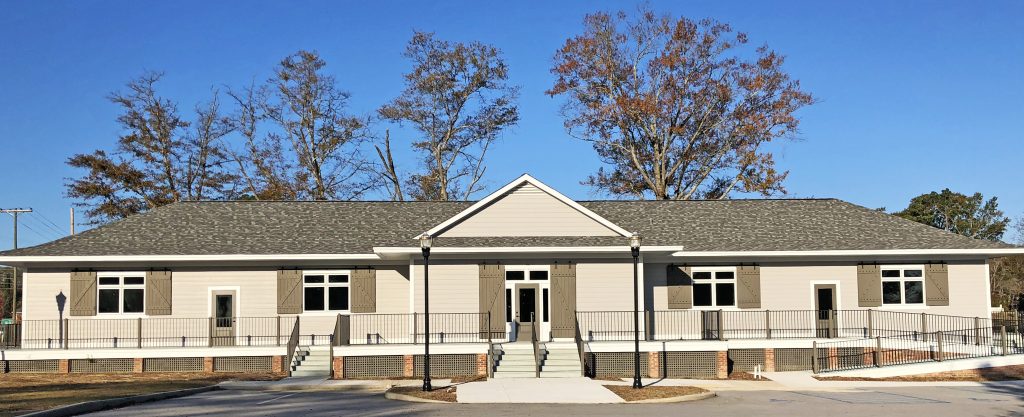
    BLYTHEWOOD – During Council’s final budget workshop on May 23, Town Administrator Brian Cook reviewed the new estimate of the final net profit from the sale of the Doko Depot shell building – $163,874. That’s about $23,723 less than the $187,597 net profit council members anticipated when they initially sold the building in 2017.

    Since that time, the sale was held up for myriad reasons including the discovery last year that title restrictions on two slivers of land in the Doko Depot property had not been disclosed to the Town in prior financing efforts with Santee-Cooper.

    Financial settlements with the prior land owners along with attorney fees and other expenses added to the cost of the sale. Mayor J. Michael has said, however, that the Town expects to recoup those expenses associated with the deed hitch.

    Council built the Depot shell with a $453,881 grant from Fairfield Electric Cooperative.

    “It’s still a big pot of money that we can move forward with and use for other projects,” Cook said about the $163,874.

    The net profit from the Depot will not be included in the current budget, Ross said, since the sale has not yet closed.

    “We don’t know exactly when that will happen,” Ross said. But he said he expects it to close before the end of the summer.

    The building is being purchased by Don Russo, who owns Freeway Music. Russo will be sharing the space with an expansion of a Lexington restaurant, the Old Mill Pub, which is owned by John Clinger

  • D-Day: Jumping into history

    ‘Longest Day’ Turned into Long Haul for Father of Publisher

    Shortly after my dad, Bruce Baker, enlisted in the Army on Oct. 6, 1942, to serve in World War II, he learned paratroopers were being paid $100 a month more than the regular infantry, so he opted for the higher pay and the 508th Parachute Infantry Regiment attached to the 82nd Airborne Division. While he had never even flown in an airplane, much less jumped out of one, he saw parachuting as an easy way to earn extra money for his young wife and infant son back in Texas.

    Staff Sgt. Bruce Baker

    In the predawn hours of June 6, 1944, he might have been rethinking that easy money as he scrambled to make his first combat jump out of a low-flying C-47 troop transport plane over Normandy, France under the most harrowing of conditions.

    The day was D-Day – and that jump was the only one he would ever make.

    The combined 13,000 paratroopers of the 82nd and 101st Airborne Divisions were an integral part of the Western allies’ massive plan to liberate Europe from Nazi occupation and stop Hitler’s advance toward the west and, potentially, the world.

    Those paratroopers were assigned what has been described by many historians as the most difficult task of the initial operation — a night jump behind the enemy lines five hours before the coastal landings. It was the greatest airborne assault in history at that time.

    After making landfall, the paratroopers were to destroy vital German supply bridges, capture causeways and prepare the way for thousands of allied ships, aircraft and infantrymen that would arrive on the heavily fortified beaches of Normandy at dawn.

    The 101st paratroopers (Mission Albany) were dropped first, beginning shortly after midnight, in three waves of about 1,800 each. They landed largely on target, northwest of Carentan, France.

    The 82nd paratroopers (Mission Boston) were dropped next, also in three waves – the 505th, the 507th and my dad’s regiment, the 508th, was the last to jump. They were to drop west and southwest of the town of Sainte-Mère-Eglise.  My dad’s regiment experienced the worst drop, with only 25 per cent landing within a mile of their drop zone. Half the regiment dropped east of the Merderet River, where they were useless to their original mission.

    The problems for the 508th drop were myriad. The troop carriers were, by then, hindered by a dense cloud cover and increasing anti-aircraft fire, causing the troop carriers to break formation and stray off course. At the same time, the enemy began moving into the drop zones, delaying the pathfinder troops in marking those zones and causing the pilots of the troop carriers to overshoot the zones as they frantically searched for markers.

    My dad later described the scene to my mom. When the green jump light flashed that morning, he and his fellow paratroopers dropped out of the open door of the aircraft into unimaginable chaos – dark skies, dense clouds, tracers everywhere and enemy fire. Plus, to avoid being hit by the enemy, the pilots of the troop carriers were maneuvering at greater speeds than would afford a good jump. My dad and many of the other paratroopers in the 508th landed widely scattered over the Normandy countryside, far from their jump zone and their well-planned assignments.

    On July 24, my mom received a telegram informing her that my dad had been reported missing in action on June 11. My brother was 2 years old and I was due to be born two months later.

    My dad later recounted to my mom how he and several other soldiers had been dropped into an area virtually surrounded by German troops and were captured five days after their boots hit the ground.

    The Germans marched the captives for several days to a train depot where they were loaded into open-slatted railway cars. Because the tops of the cars were unmarked, they were strafed repeatedly by the prisoners’ own Western allies as they were transported to Stalag 12D in Berlin, one of two prison camps where my dad would be held until being liberated by the Russian allies on Jan. 31, 1945.

    Of the 2,056 paratroopers in my dad’s regiment, 1,161 were either killed, injured or captured. While my dad survived the full blown, gut-wrenching glory that was D-Day and missed almost entirely the combat of the war, he did not escape the subsequent misery of starvation and other forms of deprivation and mistreatment he and his comrades endured in the prison camps.

    In May, 1945, shortly before the war ended, my dad was joyously welcomed home by his family and friends in our Texas hometown that had then, and still has, a population of about 200. My brother was 3 years old and I was 8 months old. It was the first time my dad had seen me.

    Quiet and laid back, my dad never appeared to carry much emotional baggage from his experiences. For the most part, he picked up where he left off before enlisting – hunting his wolf hounds by night and working in the North Texas oil fields by day. During the summers, he played baseball on a team with other men in our town on a hot, dusty sandlot they cleared off just outside of town.

    In 1982, my dad died in Young County, Texas where he had lived his entire life. Virtually everyone in our town attended his funeral and burial which lasted most of the day.

    While my dad never talked much to anyone about what he experienced on D-Day or in the prison camps, I grew up realizing that, for the adults in our town, the war was still fresh for years and years. They remembered and seemed to always have a special regard for my dad and the other men in our town who had gone to war, and for what they had done.

    Today, on this 75th anniversary of D-Day, our friends and family back in Texas will, I’m sure, remember again – as will the whole of Europe, Great Britain, Canada and America. They, like all of us, will express gratitude for the soldiers who, on D-Day, risked everything to save us all from the unspeakable evil that spawned the war and threatened the world.

  • Lunch and Learn

    COLUMBIA – The new Watercrest senior living community, under construction on Clemson Road, hosted a Lunch and Learn for Blythewood area residents on Tuesday at the Columbia Country Club. For information about the apartment residences, contact Joy Peterson at  771-7500.

  • Whitlock and Bells receive Muller Awards

    BLYTHEWOOD – Muller Road Middle students Jessica Whitlock and Luther Bells have been named winners of the 2019 Catherine McCuen Muller and George Frederick Muller Awards.

    These annual awards are presented by the Muller family to honor students who exemplify the characteristics that are modeled by the legacy of their parents, George and Catherine Muller.  Students receiving these awards are a “boy and girl who are best suited by exemplary character, academic achievement, physical fitness, appreciation for the arts and concern for others, as citizens and leaders looking to the future and making the world a better place for all.”

    Whitlock and Bells both received awards for their presentations at the University of South Carolina’s annual Region II Science and Engineering Fair in March.  Whitlock won an Honorable Mention for Chemistry for her drug solubility project and Bells won the Grand Award – Junior Division for his leopard gecko project, which allowed him to apply to present his project at the 2019 Broadcom MASTERS national middle school science competition in Washington DC – only ten percent of science fair projects nationwide are selected for this opportunity.

    Additionally, Whitlock played volleyball for Muller Road, was named a SC Junior Scholar and earned all As in eighth grade. Bells played soccer and football, sang in the Mustang Chorus and was named an Outstanding Spanish student for 8th grade.

  • Two Winnsboro residents arrested in drug bust

    WINNSBORO – Two Winnsboro residents were arrested on Friday, May 31 on multiple drug charges after the Fairfield County Sheriff’s office executed a drug search warrant on Holly Street in the Winnsboro area.

    Weldon

    Timothy D Weldon, 31, who was inside of the residence upon execution of the search warrant, was arrested for trafficking cocaine base (“crack cocaine”), trafficking cocaine, possession with intent to distribute marijuana, possession of oxycodone, possession of morphine, possession of methadone, possession of amphetamines, and possession of hydrocodone.

    Young

    Tawanda M Young, 35, who was also inside of the residence, according to deputies, was arrested for trafficking cocaine base (“crack cocaine”), trafficking cocaine, and possession with Intent to distribute marijuana.

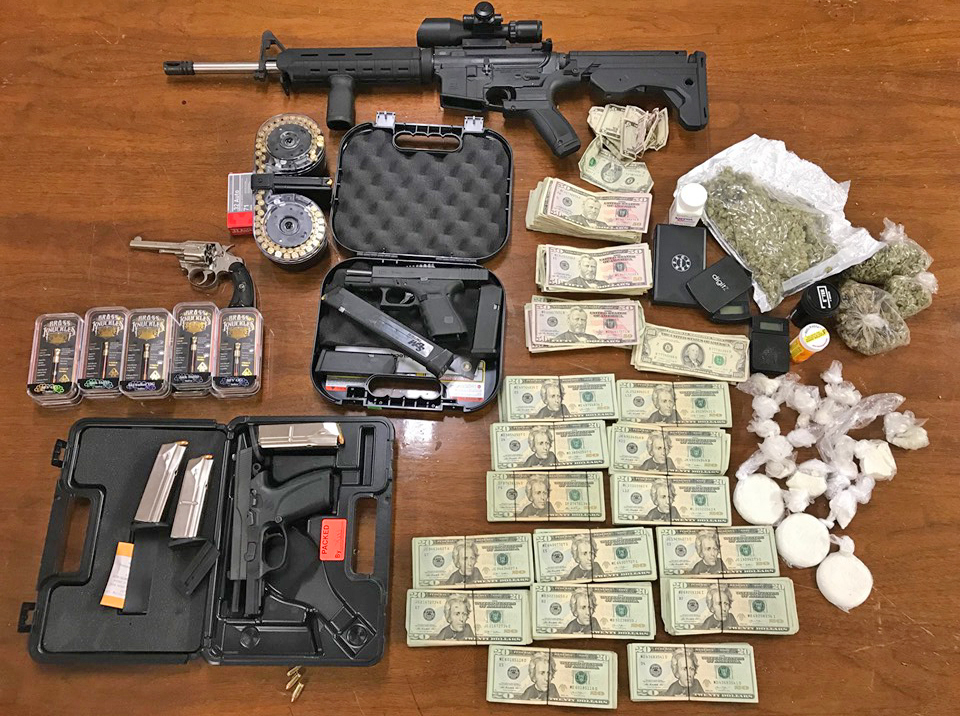
    As a result of this search warrant, deputies seized over 100 grams of cocaine base (“crack cocaine”), over 20 grams of cocaine, over 7 ounces of marijuana, and quantities of morphine, amphetamines, hydrocodone, oxycodone and methadone, the report stated.

    Additionally, deputies seized over $16,000 in US currency, three handguns and an assault rifle outfitted with a scope, high capacity magazines, and a “bump stock,” similar to that used in the 2017 Las Vegas shooting incident, sheriff’s deputies reported.

    Both Weldon and Young were transported to the Fairfield County Detention Center.

  • Council asks for 20% pay hike beginning next term

    BLYTHEWOOD – When council members are seated after the November elections, they will be receiving a pay increase if Mayor J. Michael Ross’ proposed pay increase for council members and mayor is voted into the budget for fiscal year 2019-20.

    Ross suggested at the May 23 budget meeting that the mayor’s annual salary be increased from the current $9,000 to $12,000 and council members’ salaries be increased from $6,000 to $9,000.

    “I will not get a dime of that money,” Ross joked. The town ordinance limits Blythewood elected officials to two terms, and Ross’ second term will end in November.

    “For eight years the salaries of the governing body has been the same,” Ross said. “When I was elected, the mayor’s salary was $18,000 and council’s was $12,000. Our council voted to reduce that by 50 percent,” he said.

    “When you think about everyone else making more money, no one does this job for money. I was going to kick around that we are in excellent financial condition and have money to spare,” Ross said.

    Former town councilman Tom Utruska reminded Ross from the audience that it is the staff who does most of the work.

    “They are the ones who should get the pay increase,” Utroska said, also reminding council of the insurance and retirement perks they also receive.

    And Ross conceded that the town does not have fire, water and other departments that council and the mayor have to supervise and maintain like other towns.

    When Ross brought the issue up again at the May 28 council meeting, Utroska suggested a 20 percent increase for both the mayor and council, increasing the mayor’s annual salary to $10,800 and council members’ to $7,200.

    “I think that’s fair and shows we’re moving forward,” Ross said. Second and final reading of the budget will be held June 24.

  • Green Energy BioFuel moves headquarters to Aiken

    WINNSBORO – After 10 years of operations, Green Energy Biofuel is relocating its headquarters from Winnsboro to its new Aiken facility, purchased in 2018. The business, founded by Joe Renwick of Winnsboro, collects used cooking oil from local restaurants, which is then recycled and used for biodiesel production, creating a cleaner burning alternative fuel.

    In its Winnsboro facility, the company processed 2 million gallons of grease annually. The new Aiken Plant has an industrial tank farm with custom machinery capable of processing 50 million gallons of grease annually and has been outfitted with automation systems that improve production efficiency, Renwick said.

    “While we love our Winnsboro roots and will remain active in the community, our Aiken plant has a much larger capacity that can handle our growing customer base and industrial volumes,” Renwick said. “We aren’t just closing a plant, we have built a new one that will truly fuel our future and help cultivate clean diesel fuel options for the U.S. and beyond.”

  • County, school district fund tuition ‘promise’

    WINNSBORO – Fairfield County’s school superintendent says a newly funded program will allow Fairfield County students to attend Midlands Technical College at no cost.

    Critics, however, say the money would be better spent elsewhere.

    Last month, the Fairfield County Board of Trustees voted 6-1 to approve second reading of the district’s $45.2 million budget for 2019-2020. Board trustee Paula Hartman cast the lone dissenting vote.

    The budget does not include a tax increase.

    Included in the budget is $75,000 for the Fairfield Promise Program. On Monday night, the Fairfield County Council approved a similar appropriation.

    It approved a budget amendment to match the $75,000, yielding $150,000 for Fairfield Promise.

    Council members Douglas Pauley and Jimmy Ray Douglas voted in opposition.

    Dr. J.R. Green, district superintendent, described the Promise Program as an initiative that would allow Fairfield County students to attend Midlands Technical College-Fairfield campus at no cost.

    After qualifying students receive any federal and state financial aid, “the Promise revenue would cover the balance,” Green said.

    To qualify, students would need to be a Fairfield County student – it wouldn’t be limited to the traditional public school system – and earn a GPA of 2.5. Green said the Fairfield Promise would resemble a similar program in Greenwood County.

    “It is for any student that is a resident of Fairfield County that graduates from high school,” Green said. “We’re extremely excited about this.”

    The Greenwood program, however, doesn’t fully fund college tuition for every student in the county. It uses a sliding scale that bases scholarship awards on length of residency, according to the Greenwood Promise website.

    For example, qualifying students attending county schools from grades 9 to 12 receive 65 percent funding, while students who began in Grade 5 receive 85 percent. Students starting in grades 10 or later get nothing.

    Only students attending school in the district since kindergarten receive a 100 percent award, the website states.

    Green said the $150,000 appropriation only leaves enough money for the 2019 school year.

    “Obviously with more funding we could go back to the class of 2016 or 2015,” he said.

    District officials said the $75,000 appropriation is not an additional budget item.

    Kevin Robinson, the district’s finance director, said funds were freed up by adjusting other budget expenditures.

    Fairfield County funding, however, is less certain.

    The county funded its share via budget amendment, essentially a one-off that’s not guaranteed year-to-year.

    Pauley said he didn’t oppose the program, but thought it should be funded from municipal grant funds.

    “I’m inclined to vote in favor of it, but we need to pull the money for it from somewhere else in the budget,” Pauley said. “I believe it is important and can be a big help to our youth.”

    Councilman Jimmy Ray Douglas saw the expenditure as taxpayer waste, questioning the value of Midland Technical College’s Fairfield campus.

    “That’s a waste of money. They’ve wasted money ever since they’ve been there. They’ve done nothing for the use of Fairfield County,” Douglas said. “They have tried to get nobody there to take classes and its called Midland Tech campus in Fairfield County, and they haven’t taught anything.”

    Paula Hartman, the Fairfield school board member who voted against the budget, said she didn’t oppose the Fairfield Promise expenditure per se, but did voice concerns about its viability.

    “If it’s something we don’t know we’re going to have, how are we going to budget for it?” she asked.

    Teacher Village update

    In other business, Dr. Green briefed trustees on the progress of the Teacher Village, a proposed housing project designed to lure and retain teachers by building a low-rent subdivision in Winnsboro.

    So far, the district has spent $12,500 in taxpayer money on the project, including $8,500 for surveying costs and $4,000 in legal expenses.

    Hartman questioned why the expenditures were necessary, noting that the Fairfield County School District Education Foundation created to head up the Teacher Village, had $9,100 in its own bank account.

    She also wanted to know why staff didn’t seek board approval for the expenditures.

    Green said a survey was needed to determine the boundaries of the 22 acres.

    “The district absorbed that cost,” Green said.

    As for the legal fees, Green said he previously said there would be legal fees associated with setting up the foundation. He said he provided an estimate, but not a final cost.

    “That was shared with the board,” he said.

    In November 2016, when the board voted to establish the foundation, Green told The Voice that the district would pay roughly $1,000 to register the foundation as a 501(c)(3) organization.

    It was not immediately clear why it cost $4,000 instead.

    The Teacher Village proposes building 30 homes on 22 acres the district owns off U.S. 321 Bypass, behind the district office. Teachers living there would receive taxpayer funded rent subsidies, cutting rent by about $300 a month.

    Gorelick Brothers Financial, a Charlotte, North Carolina firm that would build the development, is also seeking a $600,000 property tax waiver.

  • Frye: Chamber will be transparent

    Meggs: Town Bailout of Chamber is Unlawful

    BLYTHEWOOD – After it was revealed last week that the Greater Blythewood Chamber of Commerce is $22,000 in the red and is currently operating on a $20,000 line of credit, Interim Chamber Director Phil Frye raised eyebrows on Council when he announced the Chamber would no longer request the $17,500 grant from the Town’s general fund that it has requested and received annually for several years.

    “You are down $22,000! How can you not ask [for the grant]?” Mayor J. Michael Ross asked. “You’ve overspent, it looks like, and now you don’t need our money? I guess this is the fiscal responsibility we’ve been talking about over, over and over.”

    Town Attorney Jim Meggs made it clear where Council should be standing on the issue of funding for the Chamber.

    “You’re not a bank,” Meggs said to Ross. “Anything you do with public money has to go to a lawful public purpose. Being a bailout source is not an appropriate public purpose.”

    “But they aren’t asking for the $22,000,” Ross said. “That [grant] is the same thing they’ve been asking for every year.”

    Meggs shrugged, standing by his advice.

    Ed Parler, Council’s liaison with the chamber board, offered his explanation concerning the Chamber’s numbers.

    “The $22,000 is the profit and loss from July 1, 2018 to the projected end of the current fiscal year,” Parler said. “It is not the bank balance. [The Chamber] is anticipating taking a hit of $22,000 from the previous year. We are now operating on a line of credit until the membership dues begin coming in. With sound management, we are working toward a balanced budget.”

    “That’s a big hallelujah,” Ross said, drawing laughter from the audience.

    “The Chamber board voted unanimously against coming to Council for a bailout,” Parler said.

    “My hat’s off to you,” Ross said. “I think you’ll get the confidence of the community back that you have somewhat lost. It’s a great step forward.”

    Councilman Eddie Baughman thanked Frye for providing the Town with the financials.

    “Mike and I have talked. It is what it is and it showed what it showed,” Baughman said. “I appreciate you tightening the boot straps. It shows a lot of character.”

    “The good thing, Phil, is that if we don’t give you any money, you ain’t gotta tell us anything [about your finances],” Ross joked in an apparent reference to the requests The Voice has made for the Chamber’s financials over the past two years.

    Frye said the Chamber did, however, want to request that Council continue to purchase a $2,500 premiere membership with the Chamber, an amount that is in the Town’s proposed budget.

    Frye also asked for $14,000 for the Chamber for a fall fundraiser event. Frye said the Chamber hopes to net $10,000 from the event.

    Frye assured Council that the Chamber would be more transparent with its finances in the future.

    While praising the Chamber’s promise to be financial responsible in the future, no one on Council asked questions about the Chamber’s vague financials from this fiscal year or lack of financials from prior years. According to CPA Bob Massa, formerly both a Council member and member of the Chamber board, the financial documents submitted last week and last year by the Chamber are vague and do not show with any clarity as to where some of the money that came into the Chamber ended up.

    “Those financial records absolutely can’t be followed with any accuracy,” Massa said. “It’s anybody’s guess what was going on. They apparently kept no books on the chamber until someone started asking for them last year. And Mr. Switzer is apparently no longer available to comment on those financials. It’s hard to follow.”